A day at the beach should be one of life’s simplest pleasures. There is the sound of the surf, the warmth of the sun, and the welcome feeling of leaving ordinary responsibilities behind for a few hours. Yet when the person walking along the shoreline happens to be Goldie Hawn, even an ordinary vacation moment can become a public conversation.
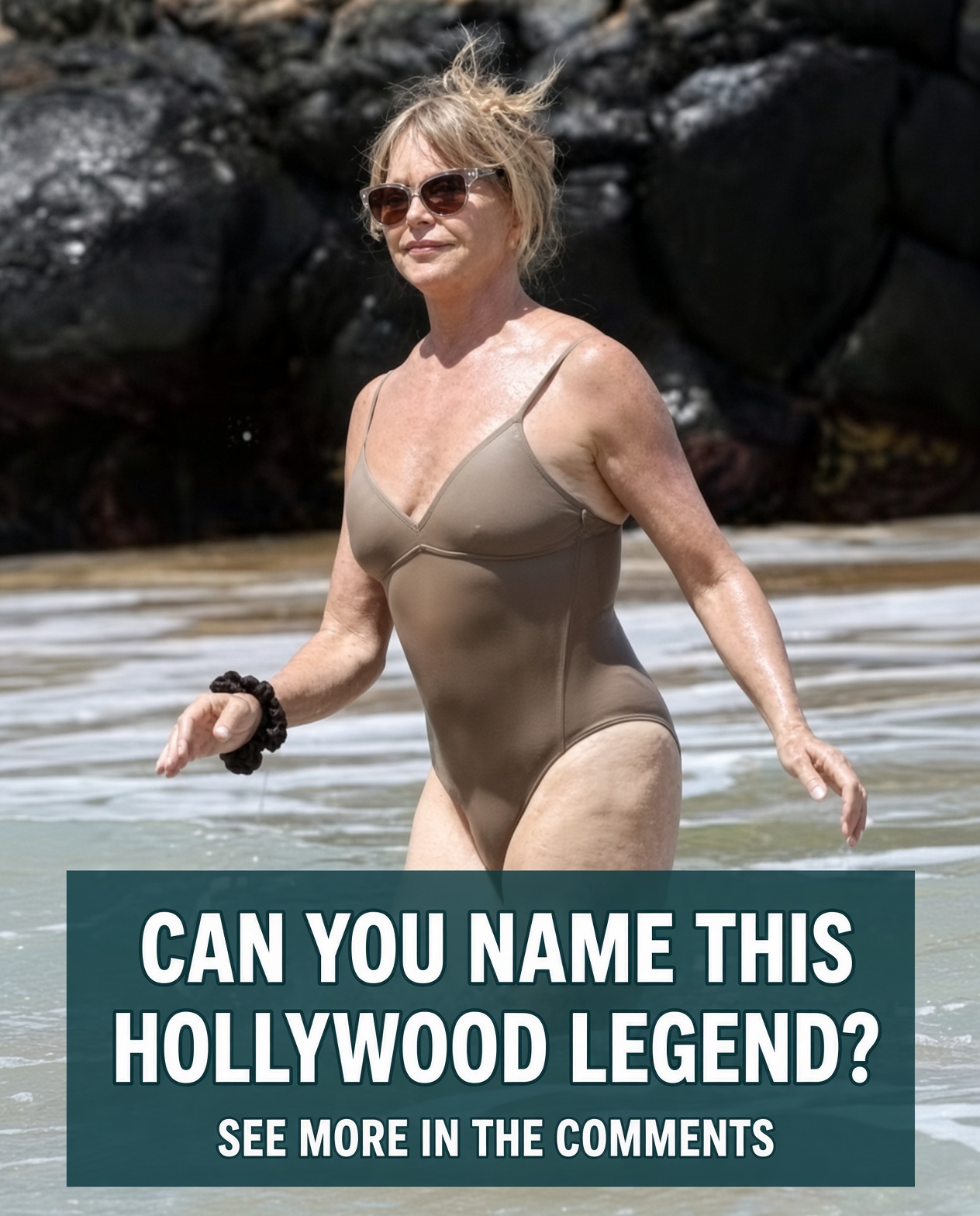
The photographs circulating online show Hawn in sunglasses and a simple one-piece swimsuit as she enjoys the water. Reactions have ranged from warm admiration to unnecessary criticism of her appearance. But the more meaningful story is not what a celebrated actress chose to wear at the beach. It is how a woman who has spent nearly six decades in the public eye continues to live on her own terms.

A Photograph That Says More About Us Than About Her
Celebrity photographs often invite strangers to make judgments they would never offer face-to-face. A single frame can suddenly become the basis for claims about a person’s health, happiness, or private state of mind, even though a photograph captures only a fraction of a second.
These vacation pictures show little more than Hawn enjoying the ocean in ordinary beachwear. What makes them interesting is the conversation they generated about aging and the expectations placed on older women, particularly those who have spent their lives in entertainment.
Hollywood has historically allowed male stars to grow older on screen while women of the same generation often face far greater scrutiny. Hawn’s long career offers a different perspective. Her appeal has never depended solely on appearance. Humor, intelligence, energy, and independence have remained central to her public identity.

The Dancer Who Made America Laugh
Goldie Hawn’s professional life began with movement rather than movie dialogue. Born in Washington, D.C., in 1945, she studied ballet as a child and later worked as a dancer and dance instructor. Her early television work included Good Morning World, but her national breakthrough came when she became a regular performer on Rowan & Martin’s Laugh-In in the late 1960s.
The fast-moving comedy series turned Hawn into one of television’s most recognizable young performers. Her bright smile and playful comic timing fit the program perfectly, but there was always more calculation behind the performance than the carefree persona suggested. Hawn understood how to play the joke while remaining completely in control of it.
An Oscar Arrived Early

Cactus Flower became Hawn’s first major movie role. Playing Toni Simmons opposite Walter Matthau and Ingrid Bergman, she brought warmth and vulnerability to the romantic comedy. The performance earned her the Academy Award for Best Supporting Actress at the 1970 ceremony while she was still in her twenties.
Rather than becoming trapped in variations of the same character, Hawn developed into one of American comedy’s most dependable stars. Her filmography grew to include Foul Play, Seems Like Old Times, Overboard, Death Becomes Her, and The First Wives Club, alongside more dramatic projects such as Steven Spielberg’s The Sugarland Express.
Private Benjamin Changed the Rules
One of the defining films of Hawn’s career arrived in 1980. In Private Benjamin, she played a sheltered young widow who joins the Army and gradually develops a stronger understanding of herself.
Hawn did more than star in the film. She also helped produce it at a time when actresses had fewer opportunities to guide major studio projects behind the camera. Her performance earned an Academy Award nomination for Best Actress.
The film’s enduring appeal goes beyond comedy. Its story is ultimately about starting again after disappointment and discovering abilities that other people failed to recognize.
Refusing Hollywood’s Expiration Date

Hawn has spoken over the years about the limited opportunities traditionally available to actresses as they grow older. Instead of allowing Hollywood’s expectations to determine every stage of her life, she demonstrated a willingness to step away from constant visibility.
For an extended period beginning in the early 2000s, acting was no longer the center of her professional life. She devoted more attention to family, learning, and philanthropic work before eventually returning to the screen. The decision challenged the idea that a successful performer must remain permanently visible to remain relevant.
A Partnership That Outlasted Hollywood Expectations
Hawn’s longtime relationship with Kurt Russell has also unfolded outside the usual celebrity pattern. The two first met while working on a Disney production when they were young performers and became a couple years later after reconnecting.
Their partnership has endured for decades without the pair feeling compelled to marry simply to satisfy public expectations. Together they built a blended family that includes their son Wyatt Russell as well as Hawn’s children Kate and Oliver Hudson and Russell’s son Boston.
The longevity of their relationship has made Hawn and Russell one of Hollywood’s most familiar couples. Their story also reinforces a theme that runs throughout Hawn’s life: she has repeatedly chosen the path that works for her rather than the one outsiders expect her to follow.
A Second Career Devoted to Children
One of the most significant chapters of Hawn’s later life has little to do with acting. Through the Goldie Hawn Foundation and its MindUP program, she became involved in educational work focused on helping young people develop emotional awareness, concentration, resilience, and social-emotional skills.
The work reveals a side of Hawn that casual moviegoers may know less about. The performer who became famous for making audiences laugh also devoted substantial energy to helping children develop tools for dealing with stress and understanding their emotions.
Why the Beach Pictures Matter—and Why They Do Not
The vacation photographs matter mainly because of the discussion they prompted about age, visibility, and the expectations society places on women. At the same time, they should not matter nearly as much as some online reactions suggest.
A person does not owe strangers a particular appearance before enjoying the ocean. A vacation is not an audition, and growing older does not erase the achievements that came before it.
Hawn’s career makes that especially clear. She moved from dancer to television comedian, from Oscar-winning actress to producer, and later became deeply involved in work supporting children. Each chapter expanded her story rather than replacing the one before it.
Still Goldie After All These Years

For viewers who first saw her on Laugh-In, Goldie Hawn may forever carry the glow of late-1960s television. Others remember Private Benjamin, the romantic comedy of Overboard, or the friendship at the center of The First Wives Club. Younger audiences may know her through her family or philanthropic work.
Each version is true, but none tells the entire story. A handful of vacation photographs can capture only a passing moment. They cannot summarize the ambition required to build a Hollywood career, the confidence needed to step away from it, or the decades of experiences that followed.
That may be the best way to understand the attention surrounding these pictures. The interesting story is not whether Goldie Hawn looks exactly as audiences remember her from decades ago. It is that she has continued moving forward while remaining recognizably herself.