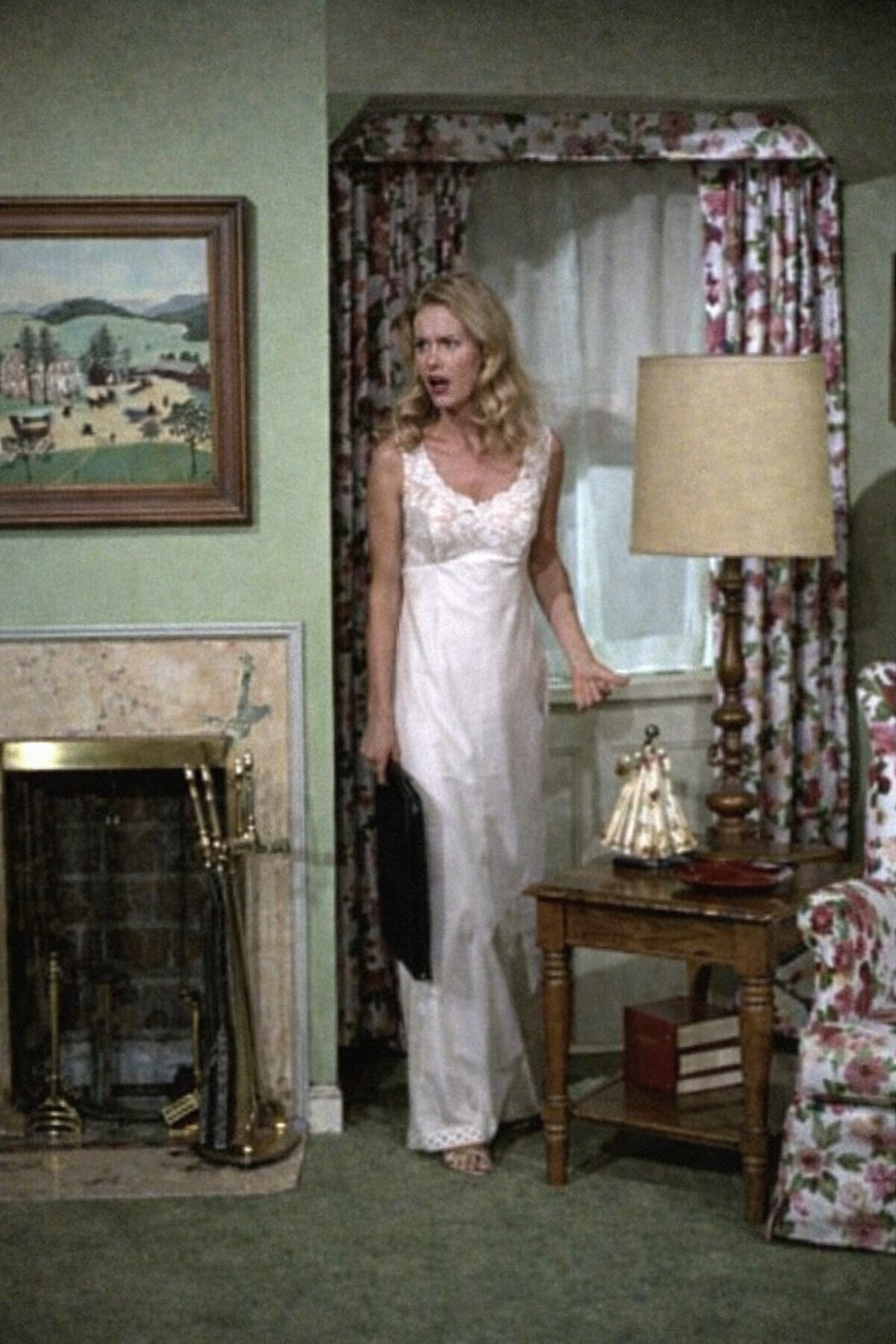
At first glance, this scene feels like a simple moment—someone stepping into a room, mid-conversation or reacting to something just out of frame. The setting is calm, familiar, and carefully arranged in that classic 1960s television style.
Everything seems to make sense.
Until you start noticing the details.
Your attention shifts to what she’s holding, how she’s positioned, and the way the moment is framed. There’s something about it that doesn’t fully align with the situation—it feels slightly out of place, even if you can’t immediately explain why.
That’s where the curiosity builds.
In many shows from this era, scenes were filmed in parts, sometimes with changes between takes that were small enough to go unnoticed during normal viewing. Props could shift, timing could vary, and even subtle gestures might not perfectly match from one angle to another.
Most of the time, it didn’t matter.
But in a still frame…
Those small differences stand out.
Some viewers might see this as a simple continuity detail—an object placed just a little differently than expected. Others might think it’s the framing, the angle, or even the way the scene was staged to guide attention somewhere else.
But once you notice it…
The moment feels different.
Because what looked completely natural at first now carries a small detail that doesn’t quite line up.
And it makes you wonder…
Was it just a tiny oversight… or something most people never stop to question?