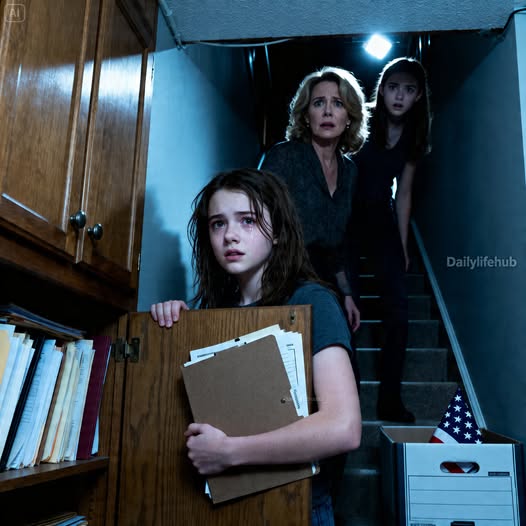
I grew up in a house where silence meant survival. Not the peaceful kind of silence, but the kind that pressed against your chest until breathing felt like a mistake. In our home in suburban Ohio, everything revolved around my older sister, Evelyn Hart. She was the kind of person people described as “effortless.” Straight A student, debate team captain, the girl teachers trusted and parents admired. She didn’t just belong in every room—she owned it. And then there was me, Nora. Always a step behind, always a little out of place, like I had walked into someone else’s life by accident.
No one ever said it outright, but I felt it in the way conversations shifted when I entered the room. In the way my father, Richard, would smile wider when Evelyn spoke, or how my mother, Claire, corrected my posture, my tone, my choices, as if she were trying to reshape me into someone else. Someone more like Evelyn. Someone worth noticing.
For years, I told myself this was normal. Families compared. Parents had favorites. It didn’t mean anything deeper. That’s what I believed, because the alternative was too unsettling to even consider.
The first crack appeared on a rainy Thursday night.
I had come home earlier than expected from a group study session. The house was quiet, but the lights in the kitchen were still on. I paused in the hallway when I heard voices—low, urgent. My mother and Evelyn. They didn’t know I was home.
“She’s been asking more questions lately,” my mother said, her voice tight.
Evelyn responded almost immediately, sharper than I had ever heard her. “Then you need to handle it. If she remembers anything, everything falls apart.”
My breath caught. Remembers what?
There was a long pause before my mother spoke again, softer this time. “She won’t. She can’t. We made sure of that.”
My heart started pounding so loudly I was certain they would hear it through the walls. I stepped back, careful not to make a sound, and slipped upstairs. My mind raced, trying to make sense of what I had just heard. It didn’t fit into any version of reality I understood.
That night, I didn’t sleep.
The next morning, everything felt… staged. My mother made breakfast like usual, placing a plate in front of me with a forced smile. My father skimmed the newspaper, barely glancing up. Evelyn scrolled through her phone, perfectly composed. It was all so normal it felt unreal.
I watched them differently now.
Every word, every glance, every pause held weight. When Evelyn laughed at something my father said, I noticed how quickly my mother joined in, how the two of them mirrored each other. When I spoke, even just to ask for more coffee, there was a hesitation—a flicker of something unspoken passing between them.
I wasn’t imagining it.
I couldn’t be.
That afternoon, I skipped my classes and went home. I didn’t have a plan. Just a feeling that if I didn’t act, I would lose whatever thread I had just begun to pull.
Our house was old, built decades before we moved in. It had hidden corners, unused cabinets, and a basement that always smelled faintly of dust and something older, something forgotten. My mother kept most of the storage locked, but I had seen her use a small brass key she wore on a chain around her neck.
I didn’t have the key.
But I had curiosity, and for the first time in my life, it felt stronger than fear.
It took me nearly an hour to find it.
Not the key itself—but where she hid it when she wasn’t wearing it. Inside a ceramic jar in the pantry, beneath a layer of neatly folded grocery receipts. My hands trembled as I lifted it out. It felt heavier than it should have, as if it carried more than just metal.
The basement door creaked as I opened it. The air down there was colder, thicker. I hesitated at the bottom of the stairs, listening. The house above me remained silent.
Good.
I moved slowly, scanning the shelves lined with boxes labeled in my mother’s precise handwriting. “Winter Clothes.” “Old Bills.” “Evelyn – School.” There was no box with my name.
That shouldn’t have surprised me.
Still, it did.
At the far end of the basement, tucked behind a stack of plastic containers, was a small wooden cabinet. It was the only thing down there that looked deliberately hidden. My pulse quickened as I stepped closer.
The key fit perfectly.
For a moment, I just stood there, my hand on the handle, wondering if opening it would change everything. A part of me wanted to walk away, to pretend I had never heard that conversation, never felt this growing unease. But another part—the part that had spent years being overlooked, dismissed, reshaped—refused to stay silent any longer.
I opened the cabinet.
Inside were files. Not many, but enough. Each one neatly organized, labeled with dates. My fingers hovered over them before selecting the one at the top.
It wasn’t labeled with my name.
It was labeled “Case 17-B.”
A chill ran down my spine.
I flipped it open, scanning the contents. Medical documents. Forms. Notes written in a handwriting I didn’t recognize. Words blurred together until one line caught my attention.
“Subject exhibits memory inconsistencies. Continued observation recommended.”
Subject.
Not patient. Not daughter.
Subject.
My hands started to shake as I turned the page. There were photographs clipped inside. Most of them were blurry, taken from a distance. A child playing in a yard. Sitting at a table. Walking into a house.
The child was me.
Or at least… it looked like me.
Same dark hair. Same posture. Same hesitant way of moving, as if unsure of the space around her. But something about it felt off. Like looking at a reflection that didn’t quite match.
Then I saw the last photograph.
And everything inside me went still.
It was a family portrait. My mother, my father, and Evelyn—standing together, smiling. It looked like one of the many photos that lined our hallway.
But I wasn’t in it.
Instead, in the corner of the photo, there was a faint outline. A shape where someone had once stood. Someone who had been… removed.
And scrawled across that empty space, in bold black ink, were three words:
“DO NOT INCLUDE.”
My breath hitched.
For a moment, the world seemed to tilt. My thoughts scattered, trying to piece together something—anything—that made sense.
I had always felt like I didn’t belong.
But this…
This wasn’t about feeling different.
This was about being erased.
A noise upstairs made me freeze. The front door opening. Voices. My family was home.
Panic surged through me as I shoved the file back into the cabinet, locking it with trembling hands. I slipped the key back into my pocket and rushed up the stairs, my heart pounding so hard it felt like it might burst.
By the time I reached my room, my hands were still shaking.
I sat on the edge of my bed, staring at nothing, trying to steady my breathing. My mind replayed everything—the whispers, the file, the photograph.
“DO NOT INCLUDE.”
The words echoed in my head, louder with every second.
What was I?
And why did it feel like the people who were supposed to love me had spent my entire life trying to make sure I never found out?
Downstairs, I heard Evelyn’s voice, light and controlled as always. “Nora? You home?”
I swallowed hard, forcing my voice to respond. “Yeah.”
There was a pause before her footsteps started up the stairs.
For the first time, I wasn’t just nervous around her.
I was afraid.
Because now I knew something she didn’t realize.
Whatever secret they were hiding…
It was already starting to come undone.

PART 2
Evelyn didn’t knock when she reached my door. She never did. She pushed it open just enough to lean against the frame, her expression carefully neutral, the same expression she used when she was evaluating someone in debate club. “You skipped school,” she said, not accusing, just stating a fact like she already knew the answer to every question she could ask. I forced a shrug, keeping my voice steady even as my pulse thudded in my ears. “Didn’t feel well.” She studied me for a second longer than necessary, her eyes flicking over my face as if searching for something beneath the surface. For a moment, I wondered if she could see it—the shift, the awareness, the fracture that had opened inside me. But then she smiled, small and controlled. “Mom’s making dinner. Don’t be weird tonight, okay?” The words were casual, but something underneath them felt sharp, almost like a warning. As she turned to leave, I noticed the slightest tension in her shoulders, the way her hand lingered on the doorframe for a fraction too long. She wasn’t as calm as she looked. That realization settled uneasily in my chest. For the first time, I wasn’t just reacting to my family—I was watching them, measuring them, trying to understand the rules of a game I didn’t even know I had been playing.
Dinner felt like a performance I had been forced into without a script. My father talked about work, my mother nodded at all the right moments, and Evelyn chimed in with practiced ease, steering the conversation whenever it drifted too close to anything real. I barely touched my food. Every movement felt exaggerated, every sound too loud. When my mother asked me about school, her tone was light, but her eyes lingered just a little too long, searching, calculating. “Fine,” I said, keeping it short. Silence followed, brief but noticeable. My father cleared his throat, shifting the conversation again, but I saw it—the quick glance he exchanged with my mother, the subtle tightening of Evelyn’s jaw. They knew something had changed. Maybe not what, not yet, but enough to make them uneasy. And then, just as I thought the night might pass without incident, my mother set her fork down with deliberate care. “Nora,” she said softly, “have you been in the basement today?” The question landed like a dropped glass, sharp and impossible to ignore. My throat went dry. I forced myself to meet her gaze, to hold it steady. “Why would I go down there?” I asked, letting just enough confusion slip into my voice. For a second, no one spoke. Then my mother smiled again, too quickly, too perfectly. “Just checking.” But I saw it—the flicker of something darker beneath the surface. Suspicion. Fear. And in that moment, I knew one thing for certain: whatever they were hiding, it wasn’t buried as deep as they thought.
That night, I waited until the house fell completely silent before moving. Every creak of the floorboards felt louder than usual, every shadow stretching longer in the dim light. I had slipped the key back where I found it after dinner, but now I retrieved it again, my movements slower, more deliberate. I wasn’t just acting on impulse anymore. I was choosing this. The basement felt different the second time, heavier somehow, as if it knew I was no longer just curious—I was searching. I went straight to the cabinet, unlocking it with steady hands this time. The file labeled “Case 17-B” sat exactly where I had left it, waiting. But now I noticed something I had missed before: a second file beneath it, thinner, unmarked. I hesitated before pulling it out, a strange sense of dread settling in my stomach. Inside were fewer documents, but they were clearer, more direct. A birth certificate—my name, Nora Hayes, typed neatly across the top. My parents’ names listed below. It looked normal. It looked real. But then I saw the date. It didn’t match. Not with anything I remembered, not with the stories my mother had told about the day I was born. My chest tightened as I flipped to the next page. A hospital record, partially redacted, with a single line visible: “Original identity sealed upon transfer.” Transfer. The word echoed in my mind, cold and clinical. I wasn’t adopted. I wasn’t just different. I had been… replaced. Or rewritten. The thought made my stomach twist. Who had I been before? And why had they taken that away?
A sudden noise upstairs jolted me out of my thoughts—a door closing, footsteps moving across the floor. Too heavy to be Evelyn. My father. I quickly slid the files back into place, locking the cabinet just as the basement door creaked open. Light spilled down the stairs, followed by his silhouette. “Nora?” His voice was cautious, uncertain in a way I had never heard before. I stepped forward slowly, forcing myself into the light. “Yeah,” I said, trying to sound casual. “I couldn’t sleep.” He studied me, his expression unreadable, but there was something in his eyes now—something closer to concern than authority. “You shouldn’t be down here,” he said quietly. “It’s not safe.” The words felt rehearsed, like something he had said before, maybe many times, just not to me. “Why?” I asked, unable to stop myself. The question hung between us, heavy and dangerous. For a moment, I thought he might answer. His lips parted slightly, his gaze shifting as if searching for the right words. But then his face hardened, the moment closing as quickly as it had opened. “Just trust me,” he said, stepping aside to let me pass. I walked up the stairs without another word, but the tension followed me all the way back to my room. He knew. Maybe not everything, but enough. And the way he had looked at me—like he wanted to say something but couldn’t—only made the truth feel closer, sharper, more real.
I didn’t sleep that night either. Instead, I lay awake, staring at the ceiling, replaying every detail, every word, every glance. Pieces of my life started to rearrange themselves in my mind, forming a pattern I had never seen before. The way my mother avoided certain questions. The way Evelyn always seemed to anticipate problems before they happened. The way my father hovered at the edges, silent, conflicted. It wasn’t just a secret. It was a system. Something carefully maintained, controlled, protected. And I was the one variable they couldn’t fully contain. As dawn crept through my window, a quiet certainty settled over me. I wasn’t going to confront them. Not yet. I didn’t have enough. But I knew where to look next. If there was a “Case 17-B,” then there were others. Other files. Other records. Other versions of the truth they had tried to bury. And somewhere in all of that, there had to be an answer to the one question that refused to let me go: who I had been before they decided I wasn’t allowed to exist anymore.
PART 3
By the time the sun fully rose, I had already made up my mind. Waiting wasn’t safety—it was surrender. For years, I had lived inside a version of reality that someone else designed for me, and now that I could see the edges of it, I couldn’t pretend it was still whole. That afternoon, while my mother was out and Evelyn was at school, I returned to the basement with a purpose that felt colder, sharper than anything I had known before. I didn’t just open the cabinet—I emptied it. File after file, each labeled with codes instead of names: 12-A, 09-C, 21-F. They weren’t all about me, but enough of them followed the same structure to make the pattern undeniable. Children monitored. Behaviors documented. Memory inconsistencies noted. Some had stamps across them: “TERMINATED,” “TRANSFERRED,” “UNSTABLE.” My stomach turned as I flipped through the pages, until I found what I had been searching for without realizing it. A thick file at the very bottom, heavier than the rest, marked only with a red line across the top. Inside, there was no code—just a name. My name. Nora Hayes. But beneath it, faintly visible as if it had been erased and rewritten, was another name. Lila Mercer. My breath caught as I traced the letters with shaking fingers. Lila. The name felt distant and familiar at the same time, like a memory just out of reach. The documents inside were different from the others—more detailed, more urgent. “Subject recovered from incident site,” one page read. “Primary identity compromised. Integration into host family approved under condition of full memory suppression.” I stopped breathing. Recovered. Integration. I wasn’t born into this family. I had been placed here. Carefully, deliberately, like a piece in a larger design.
The front door slammed upstairs before I could process it further. Voices followed—my mother’s, sharp and panicked, and Evelyn’s, lower but just as tense. They knew. I barely had time to shove the files back into the cabinet before footsteps rushed toward the basement. This time, I didn’t hide. I stood there, waiting, my heart steady in a way that surprised me. When they reached the bottom of the stairs, both of them froze. My mother’s face drained of color, her composure finally cracking. Evelyn, for the first time in my life, looked unsure. “You shouldn’t be here,” my mother said, her voice trembling despite her effort to control it. I met her gaze without flinching. “Who is Lila Mercer?” The question cut through the air like glass. Evelyn’s head snapped toward my mother, panic flashing across her face. My mother’s lips parted, but no words came out. For a moment, the silence stretched so thin it felt like it might shatter. Then my father appeared at the top of the stairs, his expression already resigned, as if he had known this moment was coming all along. “It’s over,” he said quietly, stepping down toward us. My mother turned on him, her voice breaking. “No, we can still fix this—” “There’s nothing left to fix,” he interrupted, his tone firm but not unkind. Then he looked at me, really looked at me, and something in his eyes shifted—something closer to truth than I had ever seen before. “You deserve to know.”
We sat in the living room, the same space where birthdays had been celebrated and holidays had passed like carefully staged scenes. But now it felt different, stripped of its illusion. My father spoke first. Years ago, he explained, there had been an accident—a fire in a residential facility tied to a private research program. The details were vague, deliberately hidden, but one thing was clear: I had been one of the children found at the scene. No records, no clear identity, just fragments. Lila Mercer had been the name attached to what little they could recover. The program, he said, had been experimenting with memory—how to suppress it, reshape it, control it. When the facility burned, the surviving children became liabilities. Some were relocated. Some disappeared. And a few, like me, were placed into carefully selected families under strict conditions. “We were told you would be safer this way,” he said, his voice heavy with something like regret. “That if you believed you belonged, you could have a normal life.” I laughed then, the sound sharp and hollow. “Normal?” I gestured toward Evelyn. “You gave her everything and made me into what? A placeholder?” My mother flinched, tears finally spilling over. “We did what we had to,” she whispered. But Evelyn shook her head, stepping forward. “No,” she said, her voice unsteady. “We did what was easier.” She looked at me, and for the first time, there was no perfection in her expression—just raw, uncomfortable honesty. “You weren’t supposed to remember anything. None of them were. But you… you kept asking questions. You noticed things. And Mom got scared.” My mother covered her face, her silence louder than any explanation.
The truth didn’t come all at once—it unfolded in pieces, each one reshaping the story I thought I knew. Evelyn had always known, at least partially. Not everything, but enough to understand that I wasn’t like her, that I had been brought into their family for a reason no one wanted to talk about. She had been trained, subtly, to maintain the balance, to keep me from digging too deep. Not out of cruelty, but out of fear. My mother had followed the rules rigidly, believing that control was the only way to protect us all. And my father… he had simply watched, torn between complicity and guilt, until there was no difference between the two. “So what happens now?” I asked finally, my voice quieter than I expected. No one answered right away. Then my father spoke, his tone steady despite everything. “Now, you choose.” The simplicity of it felt almost cruel. After years of being shaped, guided, hidden away, the idea of choice felt unfamiliar, almost foreign. But it was real. I could stay, pretend, try to rebuild something from the ruins. Or I could leave, find out who Lila Mercer had been, and who I might become without the weight of their expectations. I looked at each of them—my mother, broken under the weight of her own decisions; my father, finally honest but too late; Evelyn, standing there with regret written across her face. And I knew.
I left two days later. Not in the middle of the night, not in secret, but in full daylight, with a single bag and no plan beyond moving forward. My father tried to speak before I walked out, but I stopped him with a small shake of my head. There was nothing left to say that would change anything. My mother didn’t come to the door. Evelyn did. She stood there in silence for a moment before finally speaking. “I didn’t hate you,” she said quietly. “I just didn’t know how to be your sister without losing everything I was told to protect.” I nodded, accepting the truth for what it was, even if it came too late to matter. “I know,” I replied. And I did. That didn’t make it easier, but it made it clearer. As I walked away, I didn’t look back. Weeks later, I found records tied to the name Lila Mercer—fragments, scattered pieces of a life that had been interrupted but not erased. It wasn’t a clean answer, but it was mine. I enrolled in classes under that name, started building something that belonged to me, not to a system designed to control me. Back in Ohio, my father left his job and began cooperating with an investigation into the program, finally choosing truth over silence. My mother withdrew from everything, unable to reconcile the life she had built with the reality she had enforced. Evelyn stayed, carrying the weight of both roles—the perfect daughter and the sister who had failed to protect what mattered. As for me, I learned something no file, no report, no hidden truth could take away: I wasn’t the blur they tried to make me into, and I wasn’t the mistake they tried to erase. I was the proof that even the most carefully constructed lies can’t hold forever—and that sometimes, the most powerful thing you can do is decide who you are after the truth finally sets you free.