ATLANTA, Ga. — June 19, 2026
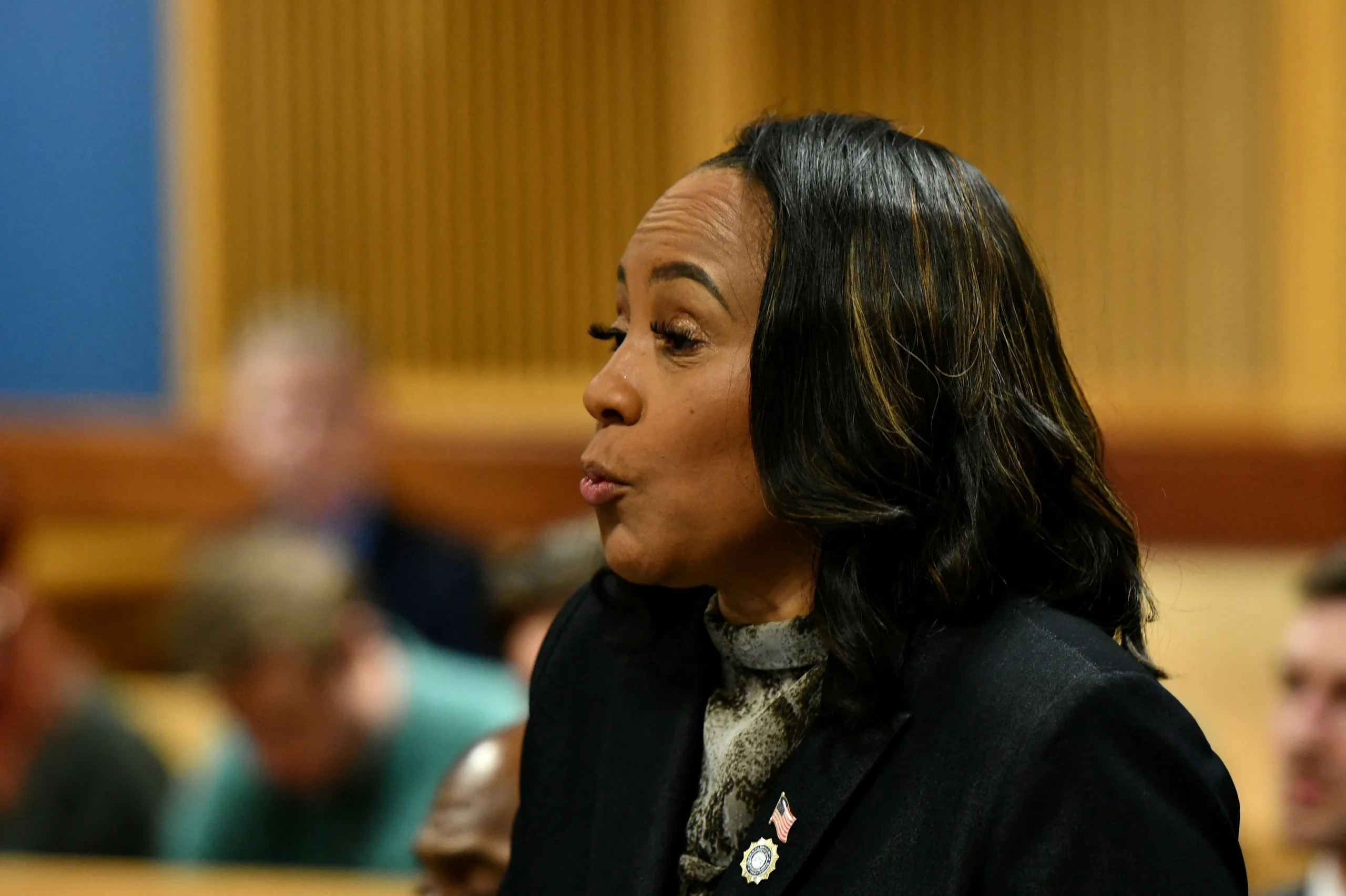
FULTON COUNTY DISTRICT ATTORNEY FANI WILLIS has been formally ordered by a superior court judge to pay $54,264 in attorneys’ fees and execute an immediate document sweep following a definitive ruling that her office intentionally violated Georgia’s Open Records Act.
The legal mandate follows a public records lawsuit filed by prominent defense attorney Ashleigh Merchant, who represents former Trump campaign and White House aide Michael Roman. Roman was one of 18 co-defendants originally indicted alongside President Donald Trump in the state’s sprawling 2023 racketeering and election interference prosecution.
Fulton County Superior Court Judge Rachel Krause issued the sharp, final enforcement order after determining that the district attorney’s office deliberately mishandled public information requests regarding internal operations, special prosecutor appointments, and public relations contracts.
“The failures to comply with the state records law were intentional, not done in good faith, and were substantially groundless and vexatious. The district attorney’s office lacked substantial justification for its sustained non-compliance.”
The court’s findings highlighted that agency personnel displayed an “openly hostile” posture toward Merchant’s information requests. According to the court record, internal open records officer Dexter Bond testified during an evidentiary hearing that he intentionally treated Merchant’s filings differently than other routine requests—including implementing a strict personal policy refusing to communicate with her by telephone.
Among the specific items Willis’ office must turn over within a mandatory 30-day window are internal communications between the district attorney and the purchasing office regarding outside legal counsel payments, an unredacted list of external attorneys hired since 2021, and copies of mandatory employee non-disclosure agreements.
The document request also targets hidden reports provided by public relations tracking firms, which were allegedly hired by the district attorney’s office to evaluate the public perception of Willis’ media statements immediately prior to seeking grand jury indictments against Trump and his political allies.
Merchant publicly celebrated the superior court’s accountability ruling on social media channels shortly after the order was formally unsealed.
“Proud that we have judges willing to hold people in power accountable when they ignore the law!!!”
The statutory penalty adds to a series of severe procedural and financial setbacks crippling the remnants of the Fulton County election interference case. The Georgia Court of Appeals previously disqualified Willis and her entire office from continuing the prosecution due to a severe “appearance of impropriety” stemming from an undisclosed romantic relationship with her former top special prosecutor, Nathan Wade, who resigned from the case in October.
Willis has appealed that disqualification to the Georgia Supreme Court, arguing that no Georgia court has ever disqualified a district attorney based solely on an appearance of impropriety without an actual conflict of interest or forensic misconduct.
Compounding the administrative friction, the Georgia Senate unanimously passed legislation in March that would allow counties to cover attorneys’ fees and other legal costs for defendants in cases where a district attorney is disqualified due to misconduct, provided the case is ultimately dismissed. As federal and state jurisdictions continue to evaluate parallel constitutional challenges, the open records ruling leaves the high-profile municipal prosecution team under immense regulatory pressure to reconcile its internal data practices with state law.
BREAKING: NEW Winners Declared in California After Ballots Counted Overnight
NORWALK, Calif. — June 19, 2026
A HIGH-STAKES CONSTITUENCY SHIFT in Southern California has resulted in an intraparty lockout for the Democratic Party, as CBS News officially projected that incumbent Republican Representatives Ken Calvert and Young Kim have both advanced to the November general election for California’s newly redrawn 40th Congressional District.

The unique dual-Republican advancement delivers a swift tactical blow to national Democratic strategists, who had successfully lobbied for a mid-decade redistricting map under California’s voter-approved Proposition 50. The measure, passed in late 2025 and backed aggressively by Governor Gavin Newsom, bypassed the state’s independent redistricting commission to intentionally manipulate boundaries, targeting a five-seat pickup for House Democrats to counteract a parallel Republican-led redistricting map in Texas.
However, the aggressive redrawing backfired mathematically within the newly established 40th District. Under California’s nonpartisan “top-two” primary protocol, the heavy consolidation of conservative voters in the redrawn Orange and Riverside County boundaries split the generic electorate, boxing out a fractured field of five Democratic candidates entirely from the autumn ballot. The final, certified primary data from Decision Desk HQ cemented Calvert in first place at 35.68 percent, with Kim securing the decisive runner-up spot at 21.12 percent.
“House control could run through California. Meaning zero resources must now be spent on defending the seat this November. Democrats have been entirely locked out.”
The race to claim dominion over the newly configured seat has ignited a fierce ideological civil war within the regional Republican apparatus. Calvert, a 33-year House veteran and Corona native, launched a campaign centered on strict border security and his alignment with the executive branch. His bid received substantial institutional momentum from Texas Republican Representative Brandon Gill, who traveled the district to bolster Calvert’s right-wing credentials.
“It comes down to two things. One is that Ken Calvert is a huge defender and supporter of the president. And number two, he’s got a fantastic record on immigration, which I think is the most important issue that we have in front of us today.”
In contrast, opponents have actively targeted Representative Young Kim’s legislative record, with surrogates highlighting her 2021 co-sponsorship of a resolution to censure Donald Trump and her support of the Dignidad Act, a bipartisan immigration framework characterized by conservative hardliners as a mass immigration amnesty bill.
The unexpected double-GOP victory comes amid a parallel public controversy surrounding the pace of the ballot canvas inside Los Angeles County’s 144,000-square-foot centralized tabulation facility in Norwalk. Investigative tours of the building revealed a stark discrepancy between a massive backlog of over 713,000 uncounted regional mail-in ballots and empty, unstaffed administrative workstations.
“In one area, where ballots that cannot be automatically read by scanners are reviewed by election workers, roughly 25 bins of ballots appeared ready for processing while no employees were seated at nearby desks.”
While the extreme delays have triggered public accusations from President Trump alleging systemic vulnerabilities and manual manipulation of late-arriving mail-in envelopes, state compliance monitors insist the sluggish timeline is a direct consequence of strict signature verification laws. For the 40th District, however, the counting delays are now mathematically irrelevant: the general election is officially locked as an all-Republican contest.
LA Mayor ‘BUSTED’ on Live TV After Spencer Pratt Video Goes Viral

LOS ANGELES, Calif. — June 19, 2026
THE CONTROVERSIAL PRIMARY RUNOFF TALLY for the Los Angeles mayoral race has officially concluded after a multi-week ballot canvas systematically erased the early lead of Republican challenger Spencer Pratt, solidifying a progressive-versus-establishment head-to-head match for the autumn general election.
Final ballot computations certified by county recorders confirmed that progressive City Council member Nithya Raman successfully overtook Pratt during late-stage universal mail-in processing, capturing the decisive second-place position to advance alongside incumbent Democratic Mayor Karen Bass. The late surge by Raman, 44, aligned with historical regional trends where late-counted mail-in envelopes heavily favor progressive and younger voter demographics in coastal California.
The final certified totals mark a stark reversal from the preliminary projections posted on Election Night, which initially showed Pratt, a former reality television personality, holding a comfortable 30.4 percent advantage to Raman’s 22.3 percent. While Pratt’s campaign originally expressed confidence that his margin would withstand the multi-day audit, subsequent drops of postmarked envelopes systematically narrowed the gap until the Associated Press officially called the second-place slot for Raman.
“The ultimate trajectory of this canvas reflects standard voter behavior under established California postmark laws, which prioritize ballot accessibility over reporting speed.”
Pratt, whose populist, anti-establishment campaign centered heavily on property destruction from last year’s historic Palisades Fire, crime rates, and homelessness, formally acknowledged the conclusion of his electoral bid in a video message broadcast across his digital channels. While he declined to contest the mathematical validity of the certified primary outcome, he explicitly rejected narrative concessions, declaring a rhetorical “war” against the remaining field.
“The campaign portion of my mission to save Los Angeles is coming to a close. But I didn’t get in this for political power, I got in this to expose this corrupt machine. Nothing’s changed. I don’t have campaign laws hamstringing me now. It’s war.”
The formal crystallization of the Bass-Raman matchup shifts the political terrain of the nation’s second-largest city squarely into an intraparty ideological debate. Mayor Bass, who fell short of the absolute 51 percent majority required to secure an outright victory on June 2, will now be forced to defend her administration’s street-level homelessness reductions and localized infrastructure spending against a sustained challenge from her political left.
The definitive exit of a Republican option from the November ballot fundamentally alters the coalition-building strategies for both remaining camps. While establishment strategists focus on consolidating moderate and conservative-leaning voters who previously rallied around Pratt’s platform, progressive organizers are moving to capitalize on the momentum of the canvas to demand structural reforms across City Hall.