“Her mother asked for you.” I stared at James. For several seconds, I couldn’t understand the sentence. Not because I hadn’t heard him.
Because I had. Every word. But they didn’t belong together. “Her mother asked for me?” James nodded. EI looked through the glass again.
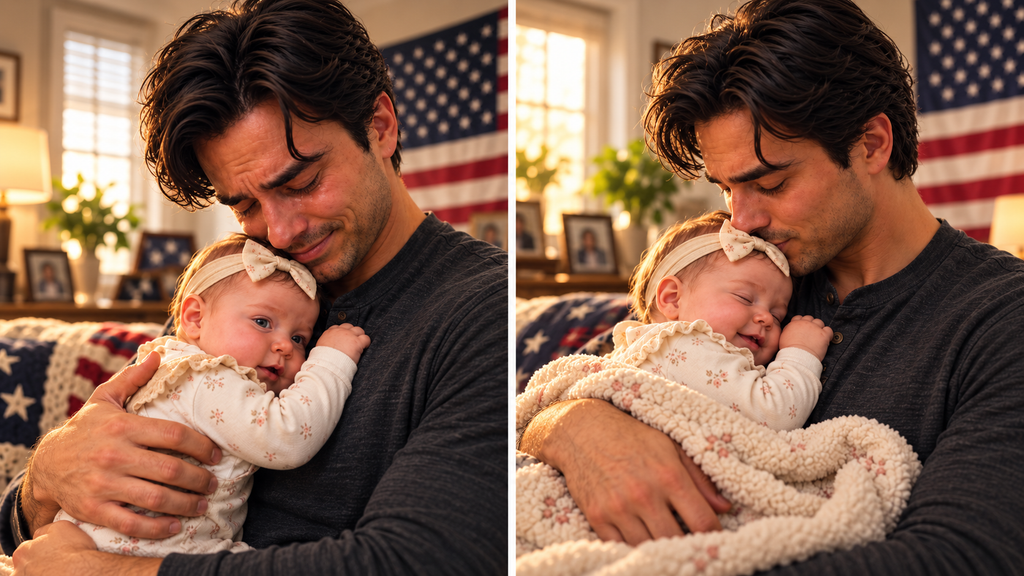
The newborn shifted beneath the pale pink blanket.
Her tiny mouth opened.
Her fist moved against her cheek.
Something inside my chest tightened so painfully that I pressed my hand against it.
“Who is her mother?”
James didn’t answer.
And that was when I knew.
Whatever had brought me to that hospital wasn’t going to be simple.
“James.”
His eyes closed.
“Who is she?”
He swallowed.
“Her name is Rebecca.”
The name meant nothing to me.
At least, I thought it meant nothing.
“Rebecca who?”
His eyes opened.
And I saw something in them that frightened me more than any answer could have.
Shame.
“I knew her before you.”
I stared at him.
“Before me?”
“Yes.”
“How long before me?”
“A few years.”
I waited.
James rubbed both hands over his face.
“Please sit down.”
“Stop telling me to sit down.”
A nurse passing us glanced over.
I lowered my voice.
“You called me away from our children, brought me to a maternity ward, showed me a newborn girl, and told me her mother specifically asked for us.”
I stepped closer.
“Now tell me why.”
James looked toward the room.
Then back at me.
“Rebecca is dying.”
My anger stumbled.
“What?”
“She had complications during delivery. There was bleeding. A lot of it.”
His voice cracked.
“They operated twice.”
I looked through the glass again.
The baby slept beneath the hospital lights, completely unaware that somewhere nearby her mother was fighting for her life.
“Oh, God.”
I covered my mouth.
“Is she going to make it?”
“They don’t think so.”
The anger in me didn’t disappear.
It simply became tangled with something else.
Fear.
Pity.
Confusion.
“Why did she ask for us?”
James reached into his coat.
He pulled out a folded envelope.
My name was written across the front.
Not typed.
Written.
Sarah.
I recognized nothing about the handwriting.
I didn’t take it.
“What is that?”
“She wrote it yesterday.”
“You’ve been here since yesterday?”
“No.”
“Then how do you know when she wrote it?”
His silence answered me.
I felt my stomach drop.
“How long have you known about this?”
“Sarah—”
“How long?”
“Six weeks.”
I actually stepped backward.
Six weeks.
For six weeks, my husband had known that some woman from his past was pregnant.
For six weeks, he had carried this secret into our house.
He had eaten dinner across from me.
Helped our youngest brush his teeth.
Kissed me goodnight.
Gone to sleep beside me.
Six weeks.
“Were you sleeping with her?”
His head snapped up.
“No.”
“Tell me the truth.”
“I am.”
“Is that baby yours?”
The question came out so quietly that it frightened even me.
James went completely still.
And there it was.
The question that could destroy eleven years in one answer.
He looked toward the bassinet.
Then at me.
“Yes.”
I stopped breathing.
The hallway disappeared.
The nurses disappeared.
The fluorescent lights became a white blur.
All I could see was James.
And all I could hear was one word.
Yes.
My knees buckled.
This time he caught me.
“Sarah!”
“Don’t touch me!”
I shoved him away so violently that he stumbled into the wall.
A nurse started toward us.
“I’m okay,” I said.
I wasn’t.
I was nowhere near okay.
I turned away from him.
I walked.
I didn’t know where I was going.
I just knew I had to get away from that room.
Away from that bassinet.
Away from the little pink blanket.
Away from the daughter I had wanted for half my life.
The daughter who apparently belonged to my husband and another woman.
“Sarah, wait.”
I kept walking.
“Sarah.”
His footsteps followed.
I reached the end of the corridor before my body finally gave up pretending it could carry me.
I pressed my back against the wall.
Then slid down.
James stopped several feet away.
He didn’t come closer.
Smart man.
I stared at him through tears.
“You cheated on me.”
“No.”
I laughed.
It came out broken.
“You just told me that baby is yours.”
“She is.”
“And you’re telling me you didn’t cheat?”
“Yes.”
“Do you hear yourself?”
“There’s something else.”
I shook my head.
“No.”
“You need to hear it.”
“I have heard enough.”
“You haven’t.”
He held out the envelope.
“Read Rebecca’s letter.”
I stared at it.
“No.”
“Please.”
“No.”
“Sarah, please.”
His voice broke completely.
And that was the moment I noticed something.
James wasn’t looking guilty.
He looked terrified.
There is a difference.
I knew my husband.
Or at least I had believed I did.
James was terrible at hiding things.
The man once spoiled his own surprise birthday party because he couldn’t stop smiling when I asked why his brother kept texting him.
If he had carried on an affair long enough to produce a child, I couldn’t understand how I had missed it.
Unless I hadn’t known him at all.
I wiped my face.
“When?”
“What?”
“When did you sleep with her?”
“I didn’t.”
“Then explain the baby.”
His shoulders dropped.
“Rebecca and I were together when we were twenty-three.”
“I know you had girlfriends before me.”
“She got pregnant.”
The air left my lungs again.
James continued.
“We were young. We weren’t ready. But we decided we’d try.”
I said nothing.
“At eleven weeks, she miscarried.”
His voice became quieter.
“It destroyed us.”
I had never heard this story.
Not once.
“We stayed together another year, but after that everything between us became grief. Every conversation. Every argument. Every silence.”
He looked at the floor.
“Eventually we ended it.”
I glanced toward the nursery.
“I still don’t understand.”
“Rebecca contacted me seven weeks ago.”
“Why?”
“She had frozen embryos.”
I stared at him.
James took another breath.
“From us.”
The hallway seemed to become completely silent.
“What?”
“After the miscarriage, we saw a fertility specialist because Rebecca had been told she might have difficulty carrying another pregnancy.”
My mouth went dry.
“We created embryos.”
I couldn’t speak.
“She kept them?”
“Yes.”
“For all these years?”
“Yes.”
“And you knew?”
“I knew they existed.”
My hands began trembling.
“But I thought they were gone.”
“What do you mean?”
“When Rebecca and I separated, she told me she was going to have them destroyed.”
He looked toward the baby.
“She didn’t.”
I closed my eyes.
Slowly, impossibly, the shape of the truth began changing.
Not an affair.
Something stranger.
Something buried almost twenty years in the past.
“When did she use them?”
“Last year.”
My eyes opened.
“Without telling you?”
“Yes.”
“Could she legally do that?”
“I don’t know.”
“You don’t know?”
“I’ve spent six weeks trying to understand what happened.”
His voice rose slightly.
“Rebecca moved several times. The clinic merged with another practice years ago. The consent documents are old. Lawyers are looking at everything.”
“Lawyers?”
“Yes.”
I stared at him.
“You hired lawyers without telling me?”
“I hired one.”
“Six weeks ago?”
“Yes.”
I laughed bitterly.
“Fantastic.”
“Sarah—”
“No. Don’t Sarah me.”
I stood.
“You may not have slept with another woman, James, but you lied to me every single day for six weeks.”
“I know.”
“You knew you had a daughter coming into this world.”
“I didn’t know what was going to happen.”
“You knew.”
“Yes.”
“And you came home every night and said nothing.”
“Yes.”
That answer hurt almost more than anything else.
Because there was no excuse inside it.
No attempt to manipulate me.
Just the truth.
I looked at the envelope.
“Why did Rebecca contact you?”
“She found out she was sick.”
“What kind of sick?”
“Cancer.”
I stared at him.
“She knew before she got pregnant?”
“No.”
“She was diagnosed during the pregnancy.”
My anger faltered again.
James continued.
“She had been planning to raise the baby herself. Then doctors found an aggressive cancer.”
He swallowed.
“She delayed some treatment because of the pregnancy.”
“Oh, God.”
“She thought she had more time.”
He looked through the glass.
“She didn’t.”
I leaned against the wall.
“And now she’s dying.”
“Yes.”
“And she wants us to take the baby.”
“Yes.”
I laughed once, but there was no humor in it.
“Us.”
“Yes.”
“She used an embryo you created together without telling you, carried your biological daughter, contacted you weeks before giving birth, and now she wants your wife to raise her child.”
James said nothing.
“Do you understand how insane that sounds?”
“Yes.”
“Do you?”
“Yes.”
“Because I don’t!”
My voice echoed down the corridor.
A nurse looked toward us again.
I didn’t care anymore.
“For years, I cried over the daughter I couldn’t safely have.”
“I know.”
“You held me.”
“I know.”
“You told me our family was enough.”
“It is.”
“And all this time there were embryos somewhere?”
“I thought they were destroyed.”
“But they weren’t.”
“No.”
“And now one of them is sleeping twenty feet away.”
James looked at me.
“Yes.”
I pressed my hands against my face.
That was when I started crying.
Not elegantly.
Not quietly.
I broke.
Right there in the maternity hallway.
Eleven years of marriage.
Three beautiful sons.
Two years of grieving a daughter who would never exist.
Six weeks of secrets.
One newborn girl behind glass.
One dying woman I had never met.
And a husband whose past had just walked into our marriage wearing a pink hospital bracelet.
James crouched several feet from me.
He didn’t touch me.
“I’m sorry.”
I shook my head.
“I don’t even know what you’re apologizing for.”
“Not telling you.”
“That’s a good place to start.”
“I was afraid.”
“So you lied.”
“Yes.”
“What did you think would happen today?”
“I didn’t know today was going to happen.”
“What does that mean?”
“Rebecca went into labor early this morning.”
I looked up.
“She wasn’t due?”
“Three more weeks.”
“Then why did you call me?”
“Because she asked for you.”
“Why?”
James held out the envelope again.
This time, I took it.
My hands shook as I opened it.
There were three pages.
The handwriting became weaker toward the bottom.
I began reading.
Sarah,
You have every reason to hate me before you know me.
Maybe after you know me too.
I stopped.
My throat tightened.
James stayed silent.
I continued.
I won’t insult you by pretending what I did was fair.
I wanted a child.
I had spent most of my adult life alone, and when I learned the embryos still existed, I convinced myself that because they were partly mine, I had the right to make the decision alone.
I know now how selfish that was.
James didn’t know.
Please believe that much.
I looked at him.
He was staring at the floor.
I kept reading.
When I discovered I was sick, I thought I could beat it.
When I realized I might not, I contacted James.
He was furious.
He should have been.
He told me the first person who deserved the truth was you.
But I asked him not to tell you until I knew whether I would survive.
That was another selfish request.
He agreed because I begged him for time.
Don’t blame him for my choices.
I lowered the paper.
“You agreed because she asked you?”
James nodded.
“You chose protecting her secret over telling your wife.”
“Yes.”
I looked down at the letter again.
That mattered.
It mattered very much.
I continued reading.
There is something else you deserve to know.
James told me about you years ago.
Not because we stayed close. We didn’t.
But once, after his father died, we exchanged a few emails.
He told me he had married the woman he should have been waiting for all along.
He told me about your boys.
Years later, I found your family online.
I saw a photograph of the five of you at a pumpkin farm.
You were holding your youngest.
James had one arm around you.
The older boys were making ridiculous faces.
You all looked happy.
I remember crying when I saw it.
Not because I wanted James back.
I didn’t.
I cried because I realized he had found what we had once tried and failed to build.
A family.
My vision blurred.
I wiped my eyes.
The next paragraph was harder.
When the doctors told me I might die, I had to decide who I trusted with my daughter.
My parents are gone.
I have no siblings.
There are cousins, but none who know me well enough to raise my child.
And there is James.
Her father.
But James has you.
That is why I am writing to you instead of him.
I stopped again.
My heart was pounding.
The final lines were shaky.
I am not asking you to fulfill my dream.
I am asking whether you could someday allow my daughter to become part of yours.
Not because you once wanted a girl.
Please don’t take her for that reason.
Take her only if, after knowing exactly where she came from, you can love her without making her spend her life apologizing for the circumstances of her birth.
If you cannot, I understand.
I have arranged another option.
But if you can, tell her I loved her enough to be afraid of leaving her.
And tell her I am sorry that my choices caused pain before she ever opened her eyes.
Her name is Grace.
Rebecca.
I read the last line twice.
Grace.
My knees weakened again.
James saw my face.
“What?”
I couldn’t answer.
He came closer.
“Sarah?”
I held the letter against my chest.
“You knew her name?”
“Yes.”
“Grace?”
“Yes.”
“Did you tell Rebecca?”
“Tell her what?”
I stared at him.
“You really don’t remember?”
His expression changed.
Then he understood.
Years ago, before our third son was born, James and I had sat on the back porch with a notebook.
We had written names.
Boy names on one side.
Girl names on the other.
There had been one name circled at the top of the page.
Grace.
The daughter we never had.
James turned pale.
“No.”
“You never told her?”
“No.”
“Never?”
“I swear.”
I looked through the glass.
The baby moved.
Grace.
I felt something almost frightening pass through me.
Not destiny.
Not some magical certainty that she belonged to me.
Something more complicated.
Grief recognizing grief.
A nurse stepped out of the room at the far end of the corridor.
“Mr. Bennett?”
James stood immediately.
“Yes?”
“Ms. Carter is awake.”
James looked at me.
The nurse hesitated.
“She’s asking for your wife.”
My stomach dropped.
“Me?”
“Yes.”
I looked at James.
He didn’t move.
“This is your choice,” he said.
Every part of me wanted to leave.
Go home.
Pick up my boys.
Lock the front door.
Pretend none of this had happened.
But somewhere behind that door was a dying woman who had written my name on an envelope.
So I went.
Rebecca looked nothing like I expected.
I don’t know what I expected.
Maybe someone beautiful enough to make me jealous.
Someone mysterious.
Someone I could easily hate.
Instead, I found a woman who looked exhausted.
Her skin was pale.
There were tubes everywhere.
Her dark hair was damp around her forehead.
She looked small beneath the blankets.
Human.
Painfully human.
Her eyes moved toward me.
“Sarah?”
I stopped beside the door.
“Yes.”
She started crying.
That disarmed me more effectively than anything else could have.
“I’m sorry.”
Those were the first words she ever said to me.
Not hello.
Not thank you.
I’m sorry.
I stood there.
She tried to lift herself.
A monitor changed rhythm.
“Don’t.”
I moved closer instinctively.
“Please don’t move.”
She settled back.
“I thought I’d have more time.”
“So did everyone, apparently.”
The bitterness slipped out before I could stop it.
Rebecca closed her eyes.
“You’re allowed.”
“I’m allowed what?”
“To hate me.”
“I don’t know you well enough to hate you.”
Her eyes opened.
“That might be worse.”
I pulled a chair closer but didn’t sit.
“Did James know?”
“Not until seven weeks ago.”
“He says six.”
“I contacted him seven weeks ago.”
She managed the faintest smile.
“He ignored me for four days.”
Despite everything, I almost laughed.
That sounded exactly like James when he was furious.
“He called me eventually,” she continued.
“He was angry.”
“He should have been.”
“Yes.”
“So should I.”
“Yes.”
At least she wasn’t pretending otherwise.
“Why did you do it?”
She looked toward the window.
For a while, she said nothing.
Then she whispered, “Loneliness can make selfishness sound reasonable.”
That sentence stayed with me.
“I was forty-one,” she said. “My parents were dead. The relationship I thought would become marriage had ended. I kept thinking about those embryos.”
She swallowed.
“I told myself they were mine too.”
“But they weren’t only yours.”
“No.”
“Did James sign something giving you permission?”
“No.”
My jaw tightened.
“Then you knew.”
“Yes.”
She looked at me.
“I knew.”
There it was.
No excuse.
No pretty version.
“I wish I could tell you I misunderstood paperwork or thought he had agreed years ago.”
Tears slipped down her cheeks.
“But I knew he hadn’t.”
“Why Grace?”
She blinked.
“What?”
“The name.”
A weak smile appeared.
“My grandmother.”
I looked down.
Coincidence.
Just coincidence.
And somehow that made it more powerful.
Because life didn’t need magic to hurt.
“Have you held her?”
Rebecca’s face crumpled.
“Once.”
I sat down.
“Why only once?”
“They took her for observation.”
Her voice shook.
“And then I started bleeding again.”
I looked toward the monitors.
“Do you know what’s going to happen?”
She nodded.
“The doctors have been very careful with their words.”
She smiled faintly.
“But I’m a lawyer.”
That surprised me.
“I know what careful words mean.”
I looked at her.
“How long?”
“They don’t know.”
Hours.
Maybe a day.
Maybe more.
But not enough.
Rebecca reached toward the bedside table.
There was a small velvet box.
“For her.”
I didn’t take it.
“What is it?”
“My grandmother’s necklace.”
“Rebecca—”
“Please.”
I took the box.
Inside was a tiny gold locket.
“I wrote letters.”
“How many?”
“Eighteen.”
I stared at her.
“One for every birthday until she’s eighteen.”
That broke something inside me.
Rebecca began crying again.
“I know that sounds presumptuous.”
“No.”
“I wrote them before I knew whether James would even agree to take her.”
I closed the box.
“He hasn’t agreed.”
Rebecca looked at me.
“No.”
“He says it’s my decision too.”
“It is.”
“You arranged another family?”
“Yes.”
“Who?”
“A couple I know from work. They’ve been trying to adopt for years.”
“So Grace has somewhere safe to go.”
“Yes.”
That should have relieved me.
Instead, something twisted in my chest.
Rebecca watched my face.
“You don’t have to save her.”
I looked at her sharply.
“She doesn’t need saving.”
A faint expression passed across Rebecca’s face.
Relief.
“No,” she whispered.
“She doesn’t.”
I stood.
“I need time.”
“I know.”
“I have three children at home who know nothing about this.”
“I know.”
“And a husband I’m currently considering throwing through a window.”
Rebecca almost smiled.
“I understand.”
I walked toward the door.
“Sarah?”
I stopped.
“I need to ask you one thing.”
I turned.
“If you decide you can’t take her, don’t let James hate you for it.”
I stared at her.
“And if I do?”
Rebecca’s eyes filled.
“Then please don’t let her grow up thinking she replaced something you lost.”
That sentence followed me out of the room.
James was waiting.
I walked past him.
“Take me home.”
He didn’t argue.
The drive lasted thirty-eight minutes.
Neither of us spoke.
When we pulled into our driveway, I saw my sister’s car.
She had picked up the boys after James called her.
Before I could open my door, James said my name.
“Sarah.”
I looked straight ahead.
“I didn’t cheat on you.”
“I know.”
“But I betrayed your trust.”
I finally looked at him.
“Yes.”
“I should have told you.”
“Yes.”
“I was scared that the moment I told you, I would lose you.”
“You nearly guaranteed it by hiding it.”
His eyes filled.
“I know.”
I opened the door.
“Where are you going?”
“Inside.”
“What do we tell the boys?”
“Nothing tonight.”
“Sarah—”
“Nothing tonight.”
He nodded.
Our youngest came flying toward me the moment I entered.
“Mommy!”
I caught him.
He wrapped his legs around my waist.
Our seven-year-old appeared behind him.
“Dad said there was an emergency.”
“There was.”
“Is everyone okay?”
I looked over his shoulder.
James had entered.
He stood near the door looking like a stranger in his own house.
“I don’t know yet,” I said.
That night, James slept downstairs.
I didn’t ask him to.
He simply carried a pillow and blanket to the couch.
At 2:17 in the morning, I was still awake.
I went to the garage.
There, on the highest shelf, was the box.
The one James had refused to throw away.
I pulled it down.
Inside were three tiny sleepers.
Two yellow.
One white.
A knitted blanket my mother had made before our oldest was born.
A pair of newborn socks.
And beneath them, something I had forgotten existed.
The notebook.
Baby names.
My handwriting.
James’s handwriting.
Stupid little arguments.
Noah — too biblical?
Oliver — Sarah hates.
Benjamin — maybe.
And on the girl side:
Grace.
Circled twice.
I sat on the garage floor and cried.
A floorboard creaked behind me.
James stood in the doorway.
He didn’t come closer.
“How long have you been there?”
“A minute.”
I wiped my face.
“Why did you keep this box?”
He looked at it.
“I don’t know.”
“Yes, you do.”
He leaned against the doorway.
“Because throwing it away felt like admitting that part of our life was over.”
“It was over.”
“I know.”
“Then why keep it?”
His voice cracked.
“Because you cried the night the doctor told us.”
I stared at him.
“And you thought I didn’t hear you.”
My throat tightened.
“You were in the shower.”
“I was outside the bathroom.”
I looked down at the tiny socks.
“I wanted a daughter so badly.”
“I know.”
“I hated myself for it.”
“Why?”
“Because we had three healthy boys.”
I pressed the socks into my palm.
“I felt ungrateful.”
James sat on the floor several feet away.
“You weren’t.”
“I was grieving someone who never existed.”
“I was too.”
We sat silently.
Then I asked the question I had been avoiding.
“Do you want Grace?”
His face changed.
He looked away.
“Tell me.”
“Yes.”
The answer hurt.
But I needed it.
“You already love her?”
“I don’t know.”
He wiped his eyes.
“I looked at her today and knew she was my daughter.”
I nodded slowly.
“And if I say no?”
He looked directly at me.
“Then we don’t bring her home.”
“You could resent me forever.”
“I might grieve.”
“That isn’t the same answer.”
“No.”
He took a breath.
“But you are my wife. We have three children. I won’t blow up four lives because of a decision Rebecca made without us.”
I studied him.
“And if I say yes?”
“Then nothing happens until lawyers, social workers, doctors, and everyone else who needs to be involved tells us what can happen.”
I almost smiled.
“That was very romantic.”
“I’m trying not to screw up another sentence.”
For the first time since the hospital, I laughed.
Just once.
Then my phone rang.
Hospital.
My heart stopped.
I answered.
“Hello?”
A nurse spoke gently.
“Mrs. Bennett?”
“Yes.”
“Ms. Carter has asked for you and your husband.”
I looked at James.
“What happened?”
“There’s been a change in her condition.”
We were back in the car within five minutes.
Rebecca was conscious when we arrived.
Barely.
Grace was in her arms.
I stopped at the door.
That was the first time I saw them together.
Mother and daughter.
Rebecca looked down at her as though trying to memorize every eyelash.
James stood beside me.
He began crying silently.
Rebecca noticed us.
“Come.”
We approached.
She looked at James.
“You have your father’s nose.”
He laughed through his tears.
“You always hated my nose.”
“I did.”
Then she looked at me.
“Sarah.”
I sat beside her.
Grace made a tiny sound.
Rebecca smiled.
“She complains constantly.”
“She’s been alive one day.”
“Exactly. Very demanding.”
I laughed.
And then Rebecca did something I wasn’t prepared for.
She held the baby toward me.
My entire body froze.
“I can’t.”
“You can.”
“No.”
“Please.”
I looked at James.
He didn’t move.
He understood.
This wasn’t his moment.
It was mine.
I reached out.
Rebecca placed Grace in my arms.
She weighed almost nothing.
Six pounds and four ounces, I would later learn.
But in that moment she felt impossibly heavy.
Because I wasn’t holding only a baby.
I was holding a decision.
A marriage.
A dying woman’s hope.
My husband’s past.
My children’s future.
And the shape of a life I had spent years teaching myself not to want.
Grace opened her eyes.
Dark.
Sleepy.
Unfocused.
She stared somewhere near my chin.
Then her tiny fingers closed around mine.
I broke.
Not because she was a girl.
That is important.
I want you to understand that.
It wasn’t because she completed some missing piece.
My sons had never been incomplete.
Our family had never been incomplete.
I cried because she was a human being who had arrived in the middle of a catastrophe she had not created.
She deserved better than becoming a symbol of everyone else’s mistakes.
Rebecca watched me.
“Don’t decide because I’m dying.”
I looked at her.
“Then why are you asking me now?”
“Because I don’t have tomorrow.”
There was no answer to that.
I looked at Grace.
Then at Rebecca.
“If she comes home with us, she knows about you.”
Rebecca started crying.
“Everything?”
“Everything age-appropriate.”
“Yes.”
“Your pictures stay.”
“Yes.”
“Your letters stay.”
“Yes.”
“You don’t become some shameful secret we hide in a drawer.”
Rebecca covered her mouth.
“And when she’s old enough to be angry about how this happened, she gets to be angry.”
“Yes.”
I looked at James.
“And he doesn’t get to rewrite history either.”
“I won’t,” he said.
I turned back to Rebecca.
“I haven’t said yes.”
“I know.”
“But those are the terms if I do.”
Rebecca nodded.
“Thank you.”
She reached toward Grace.
I placed the baby against her chest again.
Rebecca kissed her forehead.
Then she whispered something.
I barely heard it.
“You’re going to be okay.”
She said it to Grace.
But I think she was trying to convince herself.
Rebecca died at 6:14 the next morning.
James was in the room.
So was I.
Grace was in the nursery.
Rebecca’s hand was in mine.
That surprised me most.
When the monitors changed, I could have left.
I didn’t.
Nobody should have to die alone because they made terrible choices while they were alive.
Her last conscious words were not about James.
They were not about me.
They were two words.
“My baby.”
I leaned close.
“She’s safe.”
Rebecca’s eyes moved toward mine.
I don’t know whether she understood.
But her fingers squeezed mine once.
Then, eventually, they didn’t.
I walked into the hallway afterward.
James followed.
I leaned against the wall.
The exact same place where, hours earlier, I had learned Grace was his daughter.
He stood beside me.
Neither of us spoke.
Then he said, “I’m sorry.”
I looked at him.
“I know.”
“I should have told you immediately.”
“Yes.”
“I thought I was protecting you until I understood what was happening.”
“You were protecting yourself.”
He flinched.
“Yes.”
That answer mattered.
Because for once, he didn’t hide behind good intentions.
“I don’t know whether I can trust you right now.”
“I understand.”
“Don’t say you understand unless you actually do.”
He nodded.
“You may have to earn your way back into this marriage.”
“I will.”
“And I might still decide I can’t do it.”
His face tightened.
But he nodded again.
“I know.”
I looked through the nursery glass.
Grace was sleeping.
“What happens to her today?”
“Temporary custody arrangements.”
“And after that?”
“There’s a hearing.”
“When?”
“Friday.”
Three days.
Three days to decide whether a child would become our daughter.
Except it wasn’t that simple.
The next morning, the lawyer called.
There was a problem.
A significant one.
Rebecca’s will named James as Grace’s intended guardian.
But it also named someone else.
A backup guardian.
Rebecca’s cousin.
Margaret Carter.
A woman Rebecca had apparently not spoken to in nine years.
And Margaret wanted the baby.
James put the call on speaker.
Our attorney explained carefully.
“Biologically, James has a strong claim if parentage is established.”
“If?”
I said.
“The embryo documentation is old, Sarah. We’re verifying everything.”
James leaned toward the phone.
“Rebecca said I’m the father.”
“I understand.”
“Then what is there to verify?”
“Courts prefer evidence over assumptions.”
“So DNA?”
“Yes.”
I looked at James.
He nodded.
“Do it.”
The test happened that afternoon.
The results came back Thursday.
Probability of paternity:
99.99 percent.
Grace was James’s biological daughter.
I stared at the paper for a long time.
There was no longer any ambiguity.
My husband had four children.
Three sons with me.
One daughter with Rebecca.
The hearing was Friday.
Margaret arrived with an attorney.
She was in her late fifties.
Beautifully dressed.
Controlled.
She looked at James like she hated him.
Then she saw me.
Her expression became almost pitying.
“You’re the wife.”
I disliked her immediately.
“Yes.”
She looked me up and down.
“Rebecca told me about you.”
“That makes one of us. She never told me about you.”
Margaret’s mouth tightened.
James stepped between us slightly.
“Let’s keep this about Grace.”
Margaret laughed.
“You don’t get to say that.”
“Why?”
“Because Rebecca called me six months ago.”
James froze.
“What?”
“She told me she was pregnant.”
My stomach dropped.
That was three months before Rebecca had contacted James.
Margaret continued.
“She wanted me to be guardian.”
“Then why did she change it?”
Margaret looked at me.
“Ask your husband.”
“I am asking you.”
“She found his family.”
“We know.”
“No.”
Margaret shook her head.
“You don’t.”
Something cold moved through me.
“What don’t we know?”
Margaret opened her handbag.
She pulled out several printed pages.
Photographs.
Our photographs.
My oldest son’s soccer game.
A family barbecue.
James and me at our anniversary dinner.
My stomach turned.
“Where did you get those?”
“Rebecca.”
James looked horrified.
Margaret continued.
“She had been following your family online for years.”
James stared at the photographs.
“That isn’t possible.”
“It is.”
“Why?”
Margaret looked toward the courtroom doors.
“Because Rebecca didn’t choose you when she got sick.”
She looked at me.
“She chose Sarah.”
I felt the room tilt.
“What?”
“Rebecca told me she wanted you to raise Grace.”
“Why?”
“Because she had watched you.”
A chill ran through me.
“Watched me?”
“Online. Public posts. Family pictures. Things your relatives posted.”
I felt suddenly exposed.
“She saw how you were with your boys.”
Margaret’s voice softened.
“She said you were the mother she wished she’d had.”
I didn’t know what to say.
“Then why are you fighting us?”
Margaret’s eyes filled with tears.
“Because she was my family.”
The anger disappeared from her face.
“I wasn’t close to Rebecca anymore. That’s true.”
She swallowed.
“But when she called me, I thought maybe this baby would bring us back together.”
For the first time, I saw what was underneath all that control.
Grief.
Again.
Everyone around Grace seemed to be carrying some version of it.
“I bought a crib.”
Margaret whispered.
“I painted a room.”
My anger softened despite myself.
Then she said something I would remember forever.
“Everybody thinks they’re the person who should get the baby.”
She looked at me.
“But nobody gets a baby.”
I stared at her.
“A child isn’t a prize.”
She wiped her eyes.
“She’s a person.”
That was when I realized Margaret and I agreed about the most important thing.
The hearing was less dramatic than television would make you believe.
There was no shouting.
No judge pounding a gavel.
There were documents.
Questions.
Attorneys.
A social worker.
DNA results.
Rebecca’s will.
And then the judge asked me a question I had been dreading.
“Mrs. Bennett, do you want to raise this child?”
The courtroom went silent.
James looked at me.
Margaret looked at me.
The attorneys looked at me.
I could have said yes.
It would have sounded beautiful.
Instead, I told the truth.
“I don’t know yet.”
James lowered his eyes.
The judge studied me.
“You don’t know?”
“No, Your Honor.”
“Would you explain?”
I took a breath.
“I’ve known Grace exists for three days.”
The judge waited.
“My husband is her biological father. I am not her biological mother. Her birth mother made choices that affected my marriage and my family without my consent.”
I looked toward James.
“He also kept the situation from me for six weeks.”
James didn’t look away.
I continued.
“So if I stood here and said I’m completely certain about everything, I’d be lying.”
The courtroom remained silent.
“But I do know something.”
“What is that?”
I looked at the judge.
“If Grace comes into our home, she will never be punished for the choices adults made before she was born.”
Margaret lowered her head.
“She will know where she came from. She will know Rebecca loved her. She will know Margaret exists. She will know that James is her father and that I chose to become her mother only after understanding what that choice actually meant.”
My voice shook.
“And if I cannot make that choice honestly, then she deserves someone who can.”
The judge watched me for several seconds.
Then she nodded.
Temporary custody went to James.
Not to me.
To James.
Because he was her father.
That distinction mattered.
Grace came home with us two days later.
Not permanently.
Not yet.
Temporarily.
The boys were waiting.
We had told them the night before.
Not everything.
Not the embryo details.
They were children.
We told them their father had learned he had a baby daughter whose mother had died.
Our nine-year-old stared at James.
“So she’s my sister?”
“Yes.”
“Like, real sister?”
James swallowed.
“Yes.”
Our seven-year-old frowned.
“Was Dad married before you?”
“No.”
“Then how?”
I nearly choked.
James looked at me.
I looked at him.
“That,” I said, “is a complicated grown-up story we’ll explain better when you’re older.”
Our youngest had one question.
“Is she coming here?”
“Maybe.”
“Can she sleep in my room?”
“No.”
“Why?”
“Because you’re four.”
He considered this.
“Can I teach her dinosaurs?”
I started crying.
He looked alarmed.
“Mommy?”
I pulled him into my arms.
“Yes.”
I kissed his hair.
“You can teach her every dinosaur you know.”
When Grace arrived, all three boys stood at the front window.
The moment James carried the car seat inside, they surrounded him.
“She’s tiny.”
“Why is her head like that?”
“Can she see?”
“Does she have teeth?”
“Why doesn’t she have teeth?”
“Can babies eat pizza?”
“No,” I said.
Our youngest looked genuinely disappointed.
“What does she eat?”
“Milk.”
“Only milk?”
“Yes.”
He stared at Grace.
Then whispered, “That’s terrible.”
I laughed so hard I cried.
That first night was chaos.
Grace woke every two hours.
James forgot how bottle warmers worked.
Our seven-year-old came downstairs at three in the morning because he heard crying.
Our youngest somehow slept through everything.
At 4:11 a.m., I found James sitting at the kitchen table with Grace against his chest.
He looked exhausted.
I stood in the doorway.
He looked up.
“She won’t settle.”
I approached.
“Give her to me.”
He hesitated.
Not because he didn’t trust me.
Because he knew what handing her over meant.
I held out my arms.
“James.”
He gave her to me.
Grace fussed against my shoulder.
I walked slowly around the kitchen.
“Shhh.”
Her crying softened.
James watched.
“Don’t.”
“What?”
“Don’t look at me like that.”
“Like what?”
“Like this means everything is fixed.”
His face fell.
“I wasn’t.”
“Good.”
I rocked Grace.
“Because it isn’t.”
“I know.”
“You still lied to me.”
“I know.”
“And we’re going to counseling.”
“Yes.”
“And I want access to every email, every document, every conversation with Rebecca.”
“Yes.”
“No deleted messages.”
“None.”
“And if I discover another secret—”
“You won’t.”
I looked at him.
His voice softened.
“There isn’t another one.”
“There better not be.”
Grace hiccupped.
We both looked at her.
And despite myself, I smiled.
Three months passed.
Then six.
Our marriage did not magically heal because a baby entered the house.
In some ways, Grace made it harder.
Every time I looked at her, I remembered the secret.
Every time James held her, I sometimes saw Rebecca.
Then I hated myself for seeing Rebecca.
Counseling was ugly.
Necessary.
Painful.
There were sessions when I barely spoke.
Others when I yelled.
One afternoon, our therapist asked James why he had really hidden the truth.
He said, “Because Sarah had already lost the possibility of having another child.”
I stared at him.
“And?”
“I knew what hearing that Rebecca was pregnant with my biological daughter would do to her.”
“So you decided for me.”
“Yes.”
“Just like Rebecca decided for you.”
Silence.
James went pale.
That was the moment he finally understood.
He had hated Rebecca for making a life-changing decision involving him without his consent.
Then he had responded by making a life-changing decision involving me without mine.
Different decisions.
Same arrogance.
He cried that day.
Not because the therapist was cruel.
Because the truth was.
After that, something changed.
Not instantly.
But slowly.
James stopped trying to explain his secrecy.
He stopped defending it.
He started owning it.
That was the beginning of forgiveness.
Not the end.
The beginning.
Margaret remained in Grace’s life.
That surprised everyone.
Including Margaret.
She came for Grace’s first Christmas.
She sat awkwardly on our couch holding a stuffed rabbit.
Our boys treated her like she’d always been there.
Our youngest asked whether she was “sort of an aunt.”
Margaret looked at me.
I smiled.
“Sort of.”
She cried.
At Grace’s first birthday, we opened Rebecca’s first letter.
Not for Grace.
For us.
There was a note attached.
For whoever is raising her:
She hates loud noises.
At least she did before she was born.
She kicked every time a motorcycle passed.
She calmed down when I played old jazz records.
She moved most after midnight.
If she’s still doing that, I’m sorry.
James laughed.
“She absolutely is.”
I smiled.
There was another line.
Please tell her something good about me before you tell her something bad.
But tell her both.
That sentence became our rule.
Rebecca was neither saint nor villain in our house.
She was Grace’s mother.
She was intelligent.
Funny.
Stubborn.
Lonely.
She loved old movies.
She hated mushrooms.
She became a lawyer because her father once lost his small business after signing a contract he didn’t understand.
She also made an enormous decision she did not have the right to make alone.
Both things were true.
People are often more difficult than the stories we tell about them.
Grace was eighteen months old when she first called me Mama.
I wasn’t expecting it.
I was making pancakes.
She was sitting in her high chair throwing blueberries onto the floor.
Our dog had learned to station himself beneath her.
“Grace,” I said, “food stays on the tray.”
She smiled.
Then deliberately dropped another blueberry.
“No.”
Another blueberry.
“Grace.”
She laughed.
Then she reached toward me.
“Mama.”
I froze.
James was standing at the sink.
He froze too.
I turned slowly.
“What did you say?”
Grace slapped her hands against the tray.
“Mama!”
I covered my mouth.
James quietly walked out of the kitchen.
At first I thought something was wrong.
Then I realized he was giving me the moment alone.
I picked Grace up.
She grabbed my hair.
“Mama.”
“Yes.”
I held her so tightly she protested.
“Yes, baby.”
I cried into her little shoulder.
“I’m Mama.”
But when she was three, something happened that reminded me motherhood wasn’t about claiming.
We were looking through photographs.
Grace pointed to Rebecca.
“Who’s that?”
I had known the question would come.
Still, my heart jumped.
“That is Rebecca.”
“Who’s Rebecca?”
I took a breath.
“She is your first mommy.”
Grace frowned.
“First Mommy?”
“Yes.”
“Where is she?”
“She died when you were a baby.”
Grace thought about this with the strange seriousness only a three-year-old can have.
“Did she love me?”
My eyes filled.
“Yes.”
“Lots?”
“So much.”
Grace touched Rebecca’s photograph.
Then she looked at me.
“You love me lots?”
I smiled.
“More than I know how to explain.”
She seemed satisfied.
“Okay.”
Then she asked for crackers.
Children can walk through emotional minefields and immediately become hungry.
Years passed.
Our boys became fiercely protective older brothers.
Our oldest taught Grace to ride a bicycle.
Our middle son taught her how to cheat at Monopoly.
Our youngest—who was no longer the youngest—did exactly what he had promised.
He taught her dinosaurs.
At five, Grace could pronounce Parasaurolophus better than I could.
At six, she announced she wanted to become a paleontologist, a veterinarian, and a princess.
James told her those careers might conflict.
She said, “Not if I work hard.”
At eight, she asked how she was born.
Really born.
We told her more.
Not everything.
Enough.
At ten, she read Rebecca’s letters for the first time.
At eleven, she became angry.
Not at me.
At Rebecca.
“Why didn’t she ask Dad?”
We were sitting on her bedroom floor.
James was downstairs.
I had always wondered which one of us would get this question.
Apparently, me.
“She wanted you very badly.”
“That doesn’t answer me.”
No.
It didn’t.
I looked at my daughter.
“Because adults sometimes convince themselves that wanting something badly enough makes the way they get it okay.”
Grace frowned.
“But it doesn’t.”
“No.”
“Was Dad mad?”
“Yes.”
“Were you?”
“Yes.”
“At me?”
My heart broke.
“Never.”
She looked away.
“Are you sure?”
I moved closer.
“Grace Bennett, look at me.”
She did.
“You have never owed me an apology for being born.”
Her lip trembled.
“Never.”
I took her hand.
“The circumstances were complicated. You were not.”
She leaned into me.
I held her.
After a minute she whispered, “I think I’m mad at her.”
“You’re allowed.”
“But she’s dead.”
“You can still be angry at someone who died.”
“Do you hate her?”
That was harder.
I thought about the hospital.
The letter.
Rebecca’s hand in mine.
The eighteen birthday envelopes.
The choices that hurt us.
The child those choices created.
“No.”
“Did you ever?”
“I tried.”
Grace laughed softly.
“That’s weird.”
“It is.”
“What happened?”
“I met her.”
She looked at me.
“And?”
“And she became a person instead of a problem.”
Grace was quiet for a long time.
Then she asked, “Do you think she’d like me?”
I smiled.
“She would be completely obsessed with you.”
“Even though I hate jazz?”
“Especially then.”
At thirteen, Grace opened Rebecca’s thirteenth birthday letter.
She read it alone.
Then came downstairs crying.
She handed it to me.
Near the bottom, Rebecca had written:
There may come a day when you learn that I made choices before your birth that hurt people.
If that day has come, I need you to know something.
You do not have to defend me because I am your mother.
Love does not require dishonesty.
You are allowed to think I was wrong.
You are allowed to be angry.
You are even allowed to wish I had done things differently.
None of those feelings erase my love for you.
And none of my mistakes belong to you.
Grace whispered, “She knew.”
“Yes.”
“She knew I’d be angry.”
“I think she hoped you would know enough to be angry.”
Grace folded the letter carefully.
Then she asked the question I had secretly feared for thirteen years.
“If Rebecca hadn’t died, would you still have wanted me?”
I couldn’t lie.
“I don’t know.”
Her face changed.
I reached for her.
She pulled away.
“That’s horrible.”
“I know it hurts.”
“You’re my mom.”
“Yes.”
“You’re supposed to say yes.”
“I could.”
Tears filled her eyes.
“But it wouldn’t be true.”
She stared at me.
“If Rebecca had lived, she would probably have raised you. You would have had a different home. A different childhood.”
“Then you wouldn’t be my mom.”
“Probably not.”
She started crying.
I moved closer.
“This is the part people misunderstand about love, Grace.”
She wiped her face.
“What?”
“Sometimes the people we love most entered our lives because something terrible happened.”
She looked at me.
“I wish Rebecca hadn’t died.”
“So do I.”
“You do?”
“Yes.”
“Even though then you wouldn’t have me?”
I took her hands.
“If I could give you your mother back, I would.”
She cried harder.
“And I would grieve losing the life we had together.”
I kissed her forehead.
“Both things can be true.”
She wrapped her arms around me.
That night I realized something.
When Grace was a newborn, I had thought loving her meant choosing her.
Thirteen years later, I understood that loving her sometimes meant refusing to make her story about me.
The final letter came on her eighteenth birthday.
All three boys came home.
Our oldest was twenty-seven.
Our middle son was twenty-five.
Our youngest was twenty-two and still insisted he was responsible for Grace’s dinosaur obsession.
Margaret came too.
James cooked.
I made the cake.
After dinner, we sat around the table.
Grace brought down the final envelope.
The paper had yellowed slightly.
She stared at it.
“Everybody stay.”
We stayed.
She opened it.
She read silently at first.
Then stopped.
“What?”
James asked.
Grace looked at me.
“She mentions you.”
My stomach tightened.
“Read it.”
Grace took a breath.
Dear Grace,
If you are reading this, you are eighteen.
That means the people I trusted kept their promise.
I hope your childhood was ordinary in all the best ways.
I hope someone yelled at you to clean your room.
I hope you had embarrassing school pictures.
I hope you scraped your knees.
I hope you laughed until milk came out of your nose.
Our youngest interrupted.
“That happened.”
Grace glared at him.
“Shut up.”
Everyone laughed.
Then she continued.
I hope James taught you how to change a tire.
“I did,” James said.
“And I hope Sarah taught you whatever it is she believes a young woman should know.”
Grace stopped.
She looked at me.
Then continued.
But there is something I especially want you to understand about Sarah.
She owed me nothing.
She owed you nothing.
Whatever love she gave you was not an obligation created by biology.
If she became your mother, it was because she chose the work of becoming your mother over and over again.
Please never romanticize what I asked of her.
It was enormous.
I stared down at my hands.
Grace’s voice began shaking.
I hope she forgave James.
James laughed nervously.
“Eventually.”
I elbowed him.
Grace smiled through tears and kept reading.
I hope she forgave me too, although she did not owe me that either.
Most of all, I hope nobody ever made you feel like you were the daughter Sarah had been waiting for.
You were not sent to replace a dream.
You were yourself.
You were Grace.
And that was always enough.
Grace stopped reading.
Nobody spoke.
Then she looked at me.
“You knew this was in here?”
“No.”
“Dad?”
“No.”
“Margaret?”
Margaret shook her head.
Grace folded the letter.
Then she walked around the table.
She stopped in front of me.
I stood.
She hugged me.
Not the careless hug of a child.
The full, tight embrace of a young woman.
“Thank you,” she whispered.
I held her.
“For what?”
“For choosing me.”
I pulled back.
“No.”
She looked confused.
I touched her cheek.
“That’s not quite what happened.”
“What do you mean?”
“At first, yes. I chose whether to bring you into our home.”
I smiled through my tears.
“But after that?”
I looked around the table.
At James.
At our three sons.
At Margaret.
At the young woman standing in front of me.
“You chose us too.”
Grace started crying again.
Our youngest groaned.
“Great. Everybody’s crying.”
“You’re crying,” his brother said.
“I’m allergic to emotions.”
“You’re literally sobbing.”
“Shut up.”
We laughed.
Even James.
Especially James.
Later that night, after everyone went home or upstairs, James and I sat on the porch.
We were older.
His hair had gray in it.
Mine did too.
He reached for my hand.
This time, I let him.
“Do you ever think about that phone call?”
I smiled.
“There’s a baby here?”
He nodded.
“All the time.”
“You sounded insane.”
“I was insane.”
“You could have started with more information.”
“I panicked.”
“You’ve had eighteen years to develop a better excuse.”
He laughed.
Then became quiet.
“Do you regret staying?”
I looked at him.
It was a question he had asked in different ways over the years.
Never exactly like this.
I considered it.
“No.”
His shoulders relaxed.
“But that doesn’t mean what you did was okay.”
“I know.”
“And it doesn’t mean everything happened for a reason.”
“I know.”
“I hate when people say that.”
“I know.”
“Some things happen because people make bad decisions.”
“Yes.”
“Some things happen because bodies fail.”
“Yes.”
“Some things are just unfair.”
“Yes.”
I looked through the window.
Grace was laughing with her brothers in the kitchen.
“But sometimes something beautiful grows afterward.”
James squeezed my hand.
“Not because the terrible thing was necessary.”
“No.”
“Just because people decide what to build from what’s left.”
I rested my head against his shoulder.
Eighteen years earlier, I had walked into a hospital believing my life had already taken its final shape.
Three boys.
One husband.
One dream quietly buried.
Then I saw a newborn beneath a pink blanket.
And my husband told me a truth that nearly broke our marriage.
For years, people who heard pieces of our story would say things like:
“You finally got your girl.”
I always corrected them.
Because that wasn’t the story.
Grace wasn’t the prize at the end of my disappointment.
She wasn’t God’s replacement for the pregnancy I couldn’t have.
She wasn’t compensation.
She wasn’t proof that everything happened for a reason.
She was a person.
A complicated, stubborn, hilarious, dinosaur-loving person who became my daughter.
There is a difference.
The morning after her eighteenth birthday, I found the old baby-name notebook while cleaning a closet.
I sat on the floor.
Grace.
Circled twice.
I smiled.
Then Grace appeared in the doorway.
“What are you looking at?”
“Something old.”
She sat beside me.
I handed her the notebook.
She saw the name.
Her eyes widened.
“No way.”
“Yes.”
“You wanted to name a daughter Grace?”
“When your brothers were little.”
“Did Dad tell Rebecca?”
“No.”
“Are you absolutely sure?”
“Completely.”
She stared at the page.
“That is creepy.”
I laughed.
“Thank you for ruining the moment.”
“I’m serious.”
She looked at the notebook again.
“So what would you have named me if Rebecca had named me something else?”
“That isn’t how this works.”
“Come on.”
“You already had a name.”
“Hypothetically.”
I thought.
“Maybe Lily.”
She made a face.
“Absolutely not.”
“Excuse me?”
“I do not look like a Lily.”
“What does a Lily look like?”
“Not this.”
She gestured dramatically at herself.
I laughed.
Then she rested her head on my shoulder.
We sat quietly.
After a while, she whispered, “Mom?”
“Hmm?”
“I’m glad it was you.”
My throat tightened.
I kissed the top of her head.
“I’m glad it was you too.”
And finally I understood something I hadn’t understood in that hospital hallway.
The dream I had mourned all those years ago had been imaginary.
The daughter in my head had no face.
No voice.
No personality.
She never slammed doors.
Never hated broccoli.
Never failed algebra.
Never laughed so hard she snorted.
Never spent two years insisting she would become a veterinarian for dinosaurs.
Never screamed at her brothers.
Never crawled into my bed after nightmares.
Never asked impossible questions about a dead mother.
Never called me Mama.
That imaginary daughter had been a wish.
Grace was a life.
And lives are messier than wishes.
They arrive through doors you would never have chosen.
They carry histories you cannot rewrite.
They expose every weak place in a marriage.
They force you to decide whether forgiveness means pretending nothing happened or learning to live honestly with what did.
James and I nearly didn’t survive that year.
There were nights when I considered leaving.
There were mornings when he thought I already had.
There were counseling sessions where we sat on opposite ends of the couch and wondered whether love could exist without trust.
It can.
For a while.
But it cannot thrive there.
Trust had to be rebuilt.
Slowly.
Painfully.
With truth.
James learned that protecting someone from reality is sometimes just another name for controlling which reality they’re allowed to see.
I learned that forgiveness isn’t one dramatic decision.
It is hundreds of smaller ones.
And Rebecca?
I never decided whether I forgave everything she did.
Maybe forgiveness doesn’t always need a clean ending.
I forgave the dying woman whose hand I held.
I remained angry at the healthy woman who made the decision that started everything.
Both versions of her existed.
Both deserved to be remembered.
And Grace deserved the whole truth.
Years later, when people asked her about her mother, Grace developed her own answer.
She would smile and say:
“Which one?”
Sometimes they looked confused.
Grace never did.
She knew.
She had one mother who gave her life and loved her for nine months.
She had another who arrived terrified in a hospital hallway and spent the next eighteen years learning how to love a child she had never expected to meet.
Neither story erased the other.
On the anniversary of Rebecca’s death every year, we visited her grave.
The first few years, Grace brought flowers.
At sixteen, she brought one of her college brochures.
At eighteen, she brought the final letter.
She sat beside the stone for almost an hour.
I stayed near the car.
Eventually she walked back.
Her eyes were red.
“You okay?”
“No.”
I opened my arms.
She stepped into them.
After a while she said, “I told her I’m still angry.”
“Good.”
“You think that’s good?”
“I think it’s honest.”
She nodded.
“I also told her thank you.”
I didn’t ask for what.
That belonged to Grace and Rebecca.
We drove home.
James was waiting on the porch.
The boys were coming for dinner.
The house was loud before we even entered.
Exactly as it had always been.
Exactly as I hoped it always would be.
That night, Grace sat between two of her brothers while the third argued with James over football.
I stood in the kitchen doorway watching them.
For one second, I remembered myself at thirty-something.
Standing in another doorway.
Looking at a plastic bassinet.
Terrified.
Angry.
Heartbroken.
I wanted to reach through time and tell that woman something.
Not that everything would be okay.
Because sometimes it wasn’t.
Not that everything happened for a reason.
Because I still didn’t believe that.
I would tell her this:
You don’t have to understand the rest of your life today.
You only have to decide what kind of person you want to be when the next moment arrives.
Then decide again tomorrow.
And the day after that.
That is how families are built.
Not in one promise.
Not through blood alone.
Not because everything is perfect.
They are built through thousands of ordinary decisions to stay honest, to show up, to apologize, to forgive when possible, to hold boundaries when necessary, and to keep loving people without turning them into possessions.
James came into the kitchen.
“What are you doing?”
“Watching.”
He followed my gaze.
Grace was laughing so hard at something her brother said that she nearly fell off her chair.
James smiled.
“She looks like Rebecca when she laughs.”
Years earlier, that sentence might have hurt me.
Now it didn’t.
“I know.”
He slipped his hand into mine.
“And she rolls her eyes exactly like you.”
“I taught her the important things.”
He laughed.
Grace noticed us.
“What are you two whispering about?”
“You,” James said.
“That’s concerning.”
“It should be,” I said.
She rolled her eyes.
James looked at me.
I looked at him.
Then we both started laughing.
Exactly like me.
Later, after everyone had gone and the house was quiet, I passed Grace’s old bedroom.
The door was open.
On the shelf sat the tiny gold locket Rebecca had given me eighteen years earlier.
Beside it was a photograph.
Rebecca holding newborn Grace.
And beside that was another photograph.
Me holding Grace on her first birthday.
Two mothers.
One daughter.
No competition.
No replacement.
Just a complicated truth.
I switched off the hallway light.
James called from downstairs.
“Sarah?”
“Coming.”
I started toward the stairs.
Then I stopped.
For just a second.
I looked back at the room.
And I remembered the sentence that had changed everything.
There’s a baby here.
At the time, I thought James had called me to the hospital because he needed me to solve a problem.
I was wrong.
He had called because a little girl had entered the world carrying a history none of us knew how to hold.
In the beginning, I thought the question was whether I could become her mother.
It wasn’t.
The real question was whether all of us could make room for a truth that was painful, imperfect, and permanent without allowing that truth to destroy us.
It took years to answer.
But we did.
Not perfectly.
Not easily.
Together.
I went downstairs.
James was turning off the kitchen lights.
He looked at me.
“Ready?”
I smiled.
“Yes.”
He held out his hand.
I took it.
And somewhere upstairs, inside a small wooden box, eighteen letters from a woman who didn’t get enough time remained tied together with a ribbon.
Beside them sat the old notebook where the name Grace had been circled years before she existed.
Neither object proved destiny.
They proved something quieter.
Life doesn’t always give us the story we imagined.
Sometimes it gives us something far more difficult.
A story with betrayal in it.
Grief.
Anger.
Consequences.
Second chances.
People who make terrible mistakes.
People who choose to stay.
People who leave too soon.
And children who inherit none of the guilt but all of the love.
Grace never became the daughter I had dreamed about.
Thank God.
She became something infinitely better.
She became herself.
And I got to be her mother.