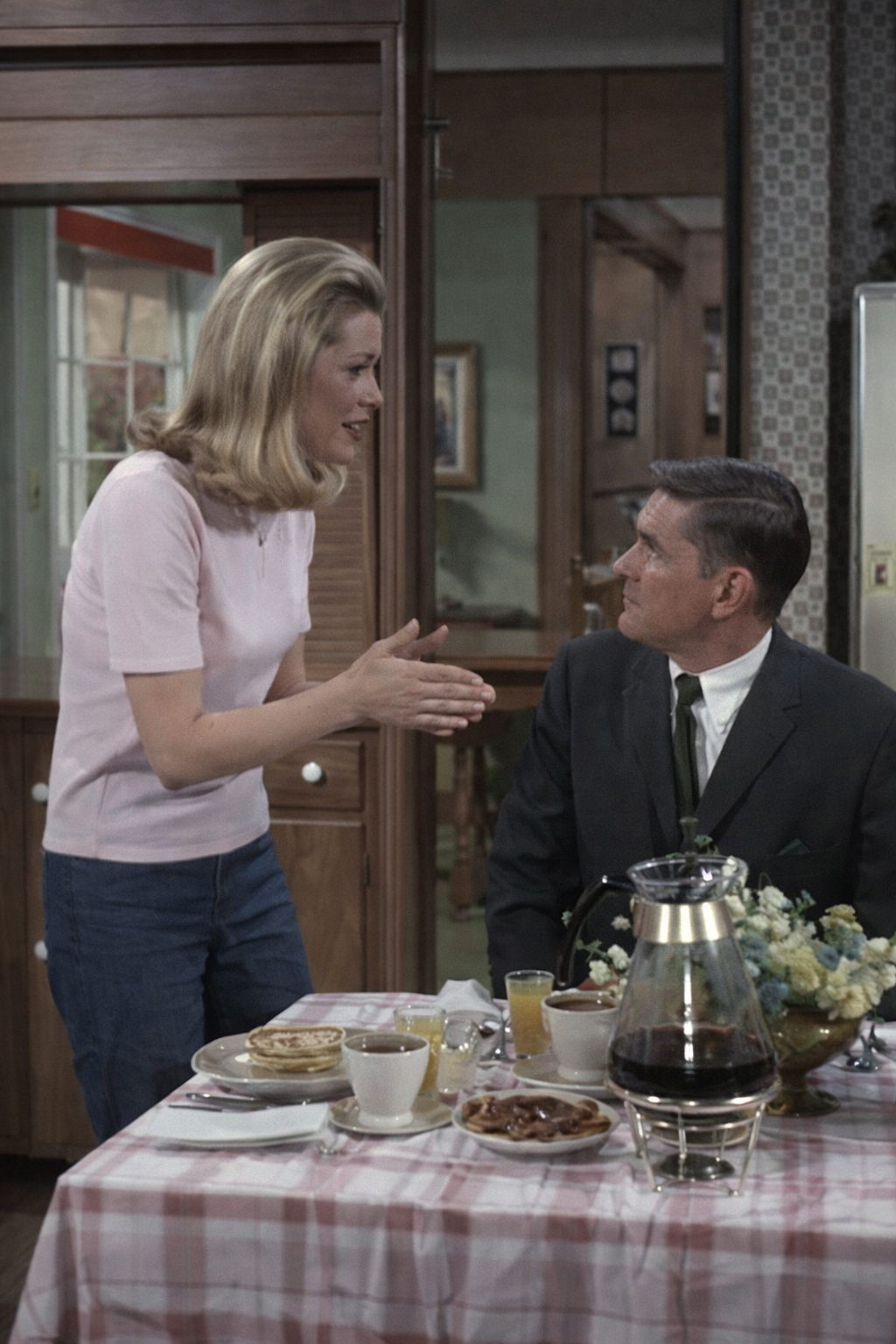
At first glance, this looks like a typical scene from a 1960s television show. A conversation at the table, morning light coming through the room, and two characters reacting to each other in what seems like a normal exchange.
Everything feels familiar.
But then something small begins to stand out.

Instead of focusing on the dialogue, your attention shifts to their reactions. She appears more intense, more engaged in the moment—while his response feels calmer, almost disconnected from the energy she’s bringing.
It creates a subtle imbalance.
In classic television, scenes like this were carefully structured so that reactions matched the tone of the conversation. Emotional pacing was usually consistent, helping everything feel smooth and believable.
Which is why this moment feels slightly different.
There’s a gap between their expressions—something that doesn’t fully align. It’s not dramatic, but it’s enough to make the scene feel just a little off once you notice it.
Some viewers might see it as a natural difference in acting styles. Others might think it’s a timing issue, where reactions didn’t perfectly match between takes.
But once you pick up on that contrast…
The entire moment feels different.
Because what seemed like a simple conversation…
Now feels like it’s holding a detail most people never stop to notice.