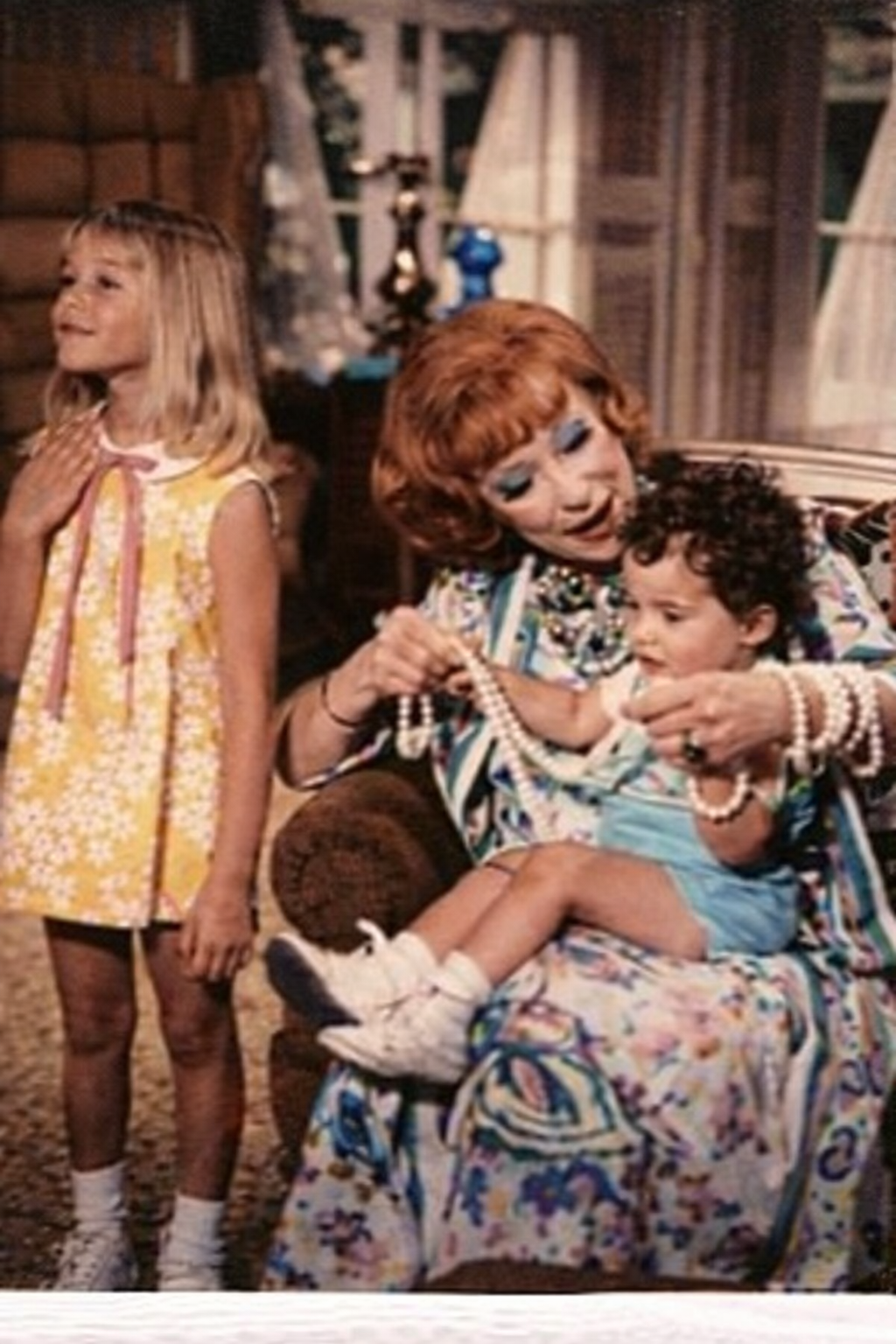
At first glance, this scene feels warm and familiar. A cozy living room, a child sitting comfortably, and an older figure gently interacting—it captures the kind of everyday moment that defined many 1960s television shows.
Everything about it feels natural.
But then, something small begins to stand out.
Instead of just focusing on the interaction, your attention shifts to the details—how the objects are being handled, the positioning of hands, and the way the moment is framed. There’s a subtle element here that doesn’t quite feel as spontaneous as it first appears.
That’s where the curiosity begins.
In classic television, scenes like this were carefully staged to look effortless, even when every movement was planned. Props, gestures, and timing all had to align perfectly across takes.
And sometimes…
Tiny inconsistencies would slip through.
They weren’t obvious while watching the episode in motion. But in a still frame, those small details become easier to notice—raising questions about what was happening just before or just after this exact moment.
Was it simply a staged interaction that feels slightly too perfect?
Or is there a small detail here that most people never pause long enough to notice?
Because once you start looking closer…
This simple moment doesn’t feel quite as simple anymore.