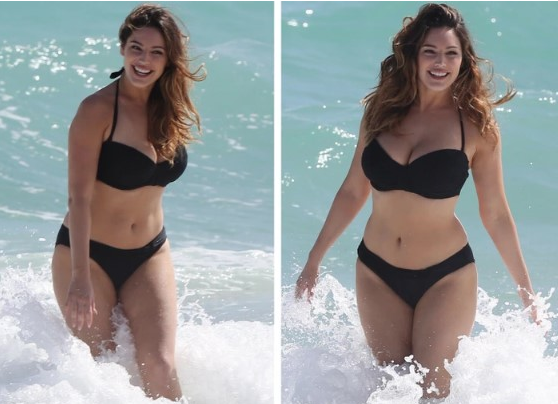
Kelly Brook has spent decades in the public eye as a model, actress and television personality, and her appearance has often been discussed in stories about changing beauty standards. Some articles have described her proportions as unusually close to certain mathematical or survey-based ideas of attractiveness, but those claims should not be mistaken for a scientific rule about what a body should look like.
Why the “Perfect Body” Claim Became So Popular
The idea spread because researchers and media outlets have long tried to measure how people perceive physical proportions. Ratios, symmetry and cultural preferences can all influence what people find attractive, but these findings do not produce one universal definition of beauty. Preferences vary across cultures, generations and individuals, and they change over time.


Brook became part of that conversation because her figure did not fit the extremely narrow fashion ideals that dominated parts of the industry in earlier decades. Her success helped show that mainstream audiences respond to a much wider range of appearances than traditional modeling standards once suggested.
Beauty Standards Are Not Fixed
Across history, the body types celebrated in art, fashion and popular culture have changed repeatedly. What one era treats as fashionable may look completely different from the next. Social media has added another layer by exposing people to heavily edited photographs, filters and carefully selected images that can make any single standard seem more universal than it really is.

That is why describing any person as having the “most perfect” body is better understood as a headline or cultural talking point than an objective scientific conclusion. Human bodies naturally vary, and no measurement can determine a person’s health, worth, confidence or attractiveness.

Kelly Brook’s Broader Impact
Brook’s long career is more meaningful than any single measurement attached to her name. She has remained visible across modeling, acting, radio and television, while also becoming part of a broader shift toward more varied representation in entertainment.
Her example is useful not because it replaces one narrow ideal with another, but because it illustrates how limiting the idea of a single “ideal” body can be. Confidence, individuality and representation matter far more than matching a particular ratio or celebrity comparison.
May you like

Beachside Glamour!: Reality TV Figure Spotted in Stunning Coastal Moment!

Model Spotted Soaking Up the Sun at the Beach!: Can You Recognize Her?
The Takeaway
The popular claim surrounding Kelly Brook reflects public fascination with beauty standards, not a universal scientific verdict. Research can explore how people perceive faces and bodies, but it cannot establish one body type that everyone should aspire to. A more accurate conclusion is that beauty is diverse, culturally influenced and deeply personal.